
How does obesity lead to diabetes?
Ready to take the next step? See if you're eligible for expert-led weight loss support.
Why are obesity and type 2 diabetes linked? How does one lead to the other? Find out in our expert guide.
Obesity and type 2 diabetes are close cousins.
According to a 2010 study, people living with obesity are seven times more at risk of developing diabetes than people of a healthy weight. Another estimate puts the risk at 80 times greater under certain conditions.
Moreover, up to 90% of people living with diabetes also live with overweight or obesity.
It's clear that obesity is a major risk factor for type 2 diabetes. This is unfortunate – not least because both conditions can have profoundly negative effects on a person's health and quality of life.
As well as type 2 diabetes, obesity is linked to an increased risk of heart disease, stroke and mental health issues. Type 2 diabetes shares many of the same complications and can also cause problems with teeth, gums, nerves, feet and other parts of the body. Both conditions can be life-altering and life-limiting. Both, too, require lifelong management.
In this article, we explore the link between the two and explain how one might lead to the other. But to do that, we must first look at type 2 diabetes and what it does to the body.
What is type 2 diabetes?
Type 2 diabetes is a condition where the body can't make or use insulin properly.
Insulin is a hormone that helps the body convert sugar from food into energy. Because type 2 diabetes affects insulin production, it causes sugar levels in the blood to build up. This leads to a condition called hyperglycaemia (high blood sugar).
Hyperglycaemia can cause symptoms like tiredness, thirst and blurred vision. If left untreated, it can lead to serious complications such as kidney problems, gum disease and damage to blood vessels.
People with type 2 diabetes sometimes use insulin injections to help manage the condition. In the UK, however, it's more common to use a medication called metformin. This medication helps the body regulate blood sugar levels and use insulin more effectively.
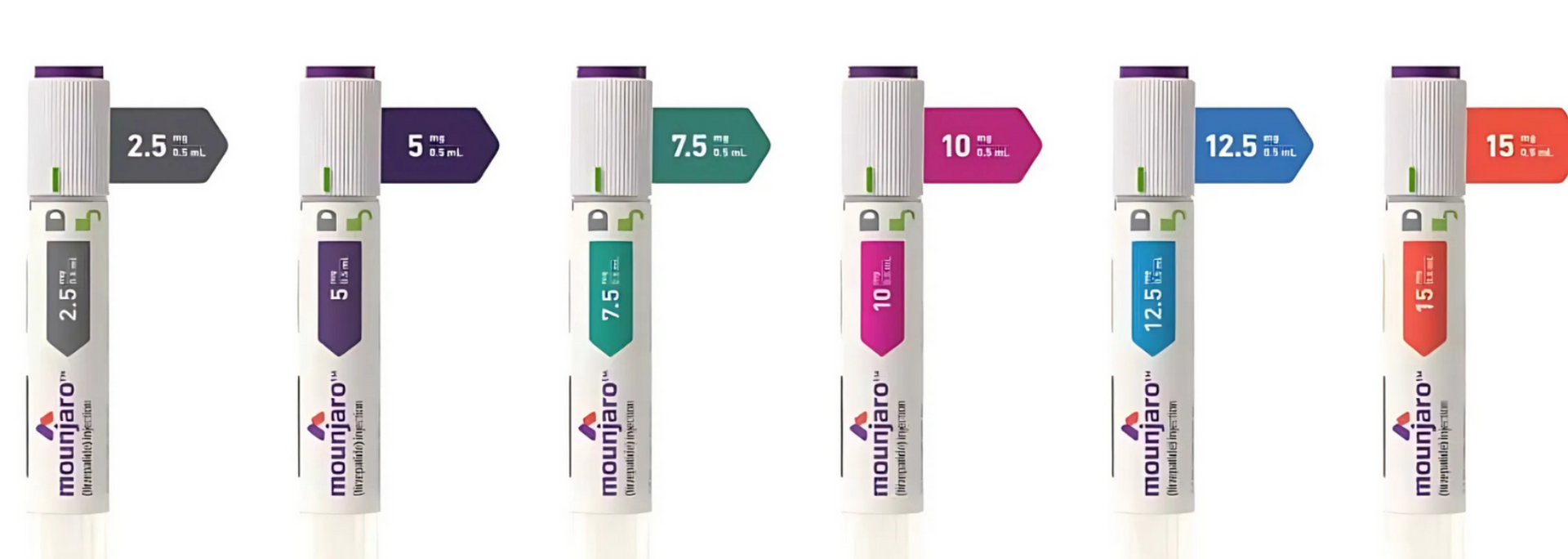
GLP-1 RA injections can also be used to manage type 2 diabetes. This includes the drugs tirzepatide (Mounjaro) and semaglutide (Ozempic).
Why might obesity increase the risk of type 2 diabetes?
We know that living with obesity makes developing type 2 diabetes more likely. However, both are very complex conditions, so we don't yet fully understand why one causes the other.
That said, experts have proposed several mechanisms that likely play a role. Let's look at two of them.
Chronic low-grade inflammation
While we don't yet know why, research suggests that obesity increases the amount of pro-inflammatory chemicals in the body.³ These are chemicals that cause inflammation.
Having too many of these chemicals can lead to a condition called 'chronic low-grade inflammation'. In simple terms, this means a little bit of inflammation that stays at a steady level for a long time.
One problem with chronic low-grade inflammation is that it can make the body less sensitive to insulin. This is known as 'insulin resistance' and is a hallmark of type 2 diabetes.
Beta-cell dysfunction
Beta cells are special cells in the pancreas that produce insulin.
We know that obesity can cause insulin resistance. If a person is resistant to insulin, their beta cells have to work especially hard. Essentially, the cells start overproducing insulin to compensate for the fact that the body can't use the hormone effectively.
Over time, the beta cells can become worn out. This often leads to a condition called 'beta-cell dysfunction'. Experts believe this can cause type 2 diabetes because the overworked beta cells are no longer capable of creating enough insulin.
What is prediabetes?
If a person has prediabetes, it means they have higher-than-normal blood sugar levels and are at risk of developing type 2 diabetes. It's hard to detect without medical help and often presents no symptoms.
Like type 2 diabetes, prediabetes is linked to obesity.
What about type 1 diabetes?
Type 1 diabetes has many of the same symptoms as type 2 diabetes but is a different condition with different causes.

As we've seen, type 2 diabetes happens because the body can't use insulin properly. However, with type 1 diabetes, the body can't produce insulin at all.
Type 1 diabetes is a lifelong condition that's not linked to obesity. We don't yet know exactly what causes it. It has to be managed by taking insulin daily via injections or a pump device.
Can you reverse type 2 diabetes?
There is no known cure for type 2 diabetes. However, it's possible to manage the condition or even put it into remission (stop its effects) by losing weight and adopting healthy lifestyle changes.
Putting the disease into remission is the best possible outcome for people living with type 2 diabetes. For some, it can mean they no longer have to take diabetes medications like metformin.
Not everyone will experience remission. However, according to one study, losing 10% of your body weight can double your chances of putting diabetes into remission over five years.
Eating a healthy diet and increasing physical activity are among the best ways of losing weight. But it's not always easy – especially if you're already trying to cope with the symptoms of diabetes.
That's where medications like Wegovy and Mounjaro can help. These weight loss injection pens were originally developed as treatments for type 2 diabetes – and are still used for this purpose. However, they're also licensed as weight loss medications for people living with obesity.
Taking Wegovy or Mounjaro could help you manage the symptoms of diabetes and take steps towards achieving a healthy weight. And if you're already diagnosed with diabetes, you may be able to access the drugs at a lower BMI – 27 instead of 30.
To find out if you're eligible, you can take our simple online consultation. SemaPen's weight loss experts will review your answers and get in touch to recommend the best treatment pathway for you.
Please note that you may have to adjust your current diabetes medication to join our Wegovy or Mounjaro programme. This is because the drugs interact with certain diabetes treatments. We'll ask you about the medication you're taking during your consultation.
Sources
1. Abdullah, A. et al. (2010) "The magnitude of association between overweight and obesity and the risk of diabetes: a meta-analysis of prospective cohort studies" Diabetes Research and Clinical Practice, 89(3) https://doi.org/10.1016/j.diabres.2010.04.012
2. Grant, B. et al. (2021) "Managing obesity in people with type 2 diabetes" Clinical Medicine, 21(4) https://doi.org/10.7861/clinmed.2021-0370
3. Khanna, D. et al. (2022) "Obesity: A Chronic Low-Grade Inflammation and Its Markers" Cureus, 14(2) https://doi.org/10.7759/cureus.22711
4. Dambha-Miller, H. et al. (2019) "Behaviour change, weight loss and remission of Type 2 diabetes: a community‐based prospective cohort study" Diabetic Medicine, 37(4) https://doi.org/10.1111/dme.14122
This article was reviewed by and approved by Alice Fletcher, Lead Bariatric Dietitian, on 3 April 2025.
- Average 15-21% weight loss*
- Tailored programmes built by real experts
- Targeted support to make success feel simpler
- Unique app with weight loss tools and lessons
Your journey starts here
Start your personalised weight loss plan in minutes.
1
Start your online consultation
2
Get approved by our clinical team
3
Begin your programme