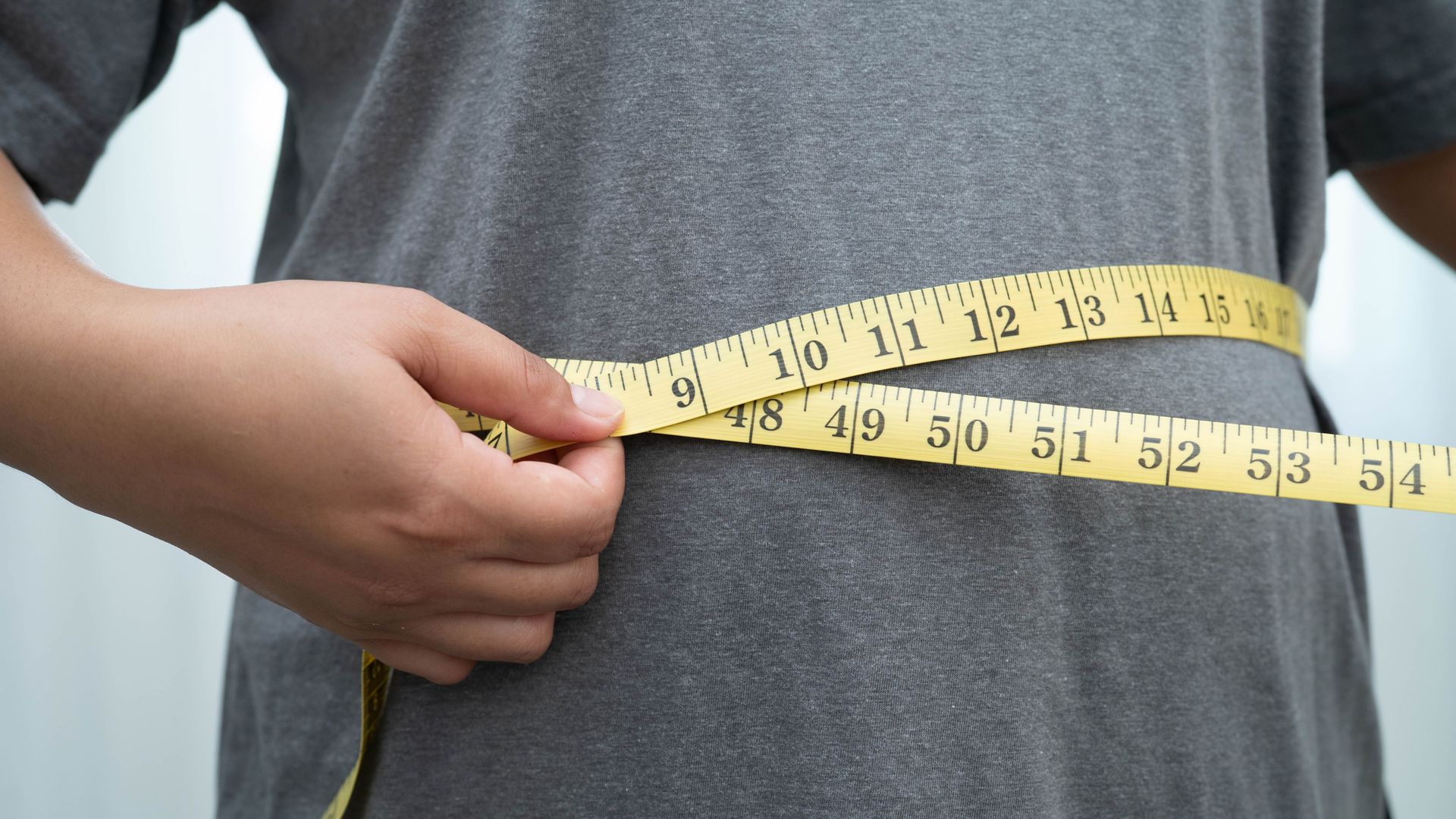

Do you need medication to lose weight?
Ready to take the next step? See if you're eligible for expert-led weight loss support.
Is medical support necessary for weight loss? Explore the realities of obesity, appetite, biology and sustainable long-term weight management.

First things first – technically speaking, no, you do not
need
medication to lose weight.
At its simplest, weight loss happens when the body uses more energy than it consumes. This is known as a 'calorie deficit'. From a purely biological perspective, this is a relatively straightforward principle.
But real life can be anything but straightforward.
Human behaviour, appetite, stress, mental health, modern food environments, work patterns, sleep, hormones, medical conditions, social expectations and pressures… All these things influence how easy or difficult it is to maintain healthy habits consistently over time.
That's why many people benefit from additional support, which can include:
- Nutritional guidance
- Behavioural support
- Clinical monitoring
- Personal training
- Medication
Weight loss – simple in theory…
When the body consistently uses more calories than it receives from food and drink, it begins using stored energy to make up the difference. That stored energy includes body fat.
That's why many approaches to weight management ultimately focus on:
- Reducing calorie intake
- Increasing physical activity
- Improving food quality
- Supporting sustainable habits
In theory, this sounds manageable.
…but more challenging in practice
Modern life is arguably not optimised for long-term weight management.
Many of us are navigating factors like:
- Sedentary jobs
- Stress and burnout
- Poor sleep quality
- Time pressures and commitments
- Proccessed, calorie-dense food and drink
- Social habits centred around food or alchahol
- Financial barriers to healthier choices
On top of this, appetite and body weight are influenced by complex biological systems. These systems evolved to prevent starvation, not to help people maintain weight loss in the modern world.
This means when people lose weight, the body often responds by increasing hunger signals, reducing energy expenditure and encouraging weight regain.
That's one reason sustainable weight loss can feel far more difficult than people expect.
Obesity is much more complex than willpower
For a long time, obesity was often misunderstood as a matter of discipline or personal responsibility.
We now understand that the reality is much more complicated.
Genetics, hormones, metabolism, environment, mental health, medication use, sleep, stress, and socioeconomic factors can all influence body weight and appetite regulation.

This doesn't mean lifestyle changes are unimportant – they are, in fact, central to long-term health. However, it does mean that weight management is not as simple as eating less and moving more.
We can understand what to do while still finding it difficult to maintain consistency in everyday life.
Where do weight loss medications fit in?
Weight loss medications, such as
Wegovy and
Mounjaro, are designed to support people who may benefit from additional help managing appetite and eating behaviours.
These medications work by influencing hormones involved in several bodily systems, including:
- Appetite regulation
- Fullness and safiety
- Digestion
- Blood sugar control
Many patients find that with medication, they experience reduced hunger pangs, fewer cravings and greater feelings of fullness after smaller meals. In turn, this leads to an improved ability to maintain a calorie deficit.
Importantly, these medications do not 'melt away fat' independently. They work best when combined with sustainable lifestyle changes and nutritional and behavioural support.
What does the evidence show?
Studies have shown significant average weight loss outcomes with newer GLP-1-based medications.
In clinical trials:
- Mounjaro users lost an average of around 21% of their starting body weight over 72 weeks.¹
- Wegovy users lost an average of around 15% over 68 weeks.²
These are substantial results, particularly for individuals who may have previously struggled to manage their weight.
However, medication is still only one part of the picture. Sustainable, long-term weight management usually depends on broader behavioural and lifestyle support as well.
Medication is not the only form of support
Discussion around weight loss can sometimes be polarised. People may feel under pressure to lose weight 'naturally' with no support, or that the alternative is to rely solely on medication.
However, the most successful long-term approaches involve multiple forms of support working together.
This could include a combination of:
- Nutritional guidance
- Behavioural coaching
- Physical activity or training
- Medical supervision
- Community accountability
For many people, medication is simply one tool among many.
Some people may not need medication…

Not everybody requires prescription treatment to lose weight successfully. It's possible to achieve sustainable progress through dietary changes, increased activity and structured routines, along with better sleep and stress management.
Others may simply prefer not to use medication for personal or medical reasons. For these people, other forms of structured support exist. Our SemaHealth
meal replacement programme, for instance, uses nutritionally complete soups and shakes alongside dietitian support to promote weight loss without relying on willpower alone.
There is no single 'correct' route to weight management and improving our overall health.
…while others greatly benefit from medical support
At the same time, it's important not to minimise how challenging long-term weight management can be for many people.
Repeated cycles of weight loss and gain are extremely common.
For people living with obesity, appetite regulation and food preoccupation can often feel exhausting and overwhelming. This is particularly the case in environments where highly processed food is constantly available and aggressively marketed.
In these situations, additional interventions may provide meaningful support.
Why support matters alongside medication
Medication alone is rarely enough to create sustainable long-term change.
The most effective approaches usually involve learning healthy habits and routines that remain manageable over time.
Understanding hunger and fullness cues, learning how to build nutritionally balanced meals, and developing realistic activity habits all contribute to sustainable long-term weight management.
Generally speaking, medical support is accepted in almost every other area of health. People use glasses, contact lenses or laser surgery to improve their vision. They have physiotherapy for injuries, or take medicine to manage high or low blood pressure.
Weight management needn't be treated any differently.
Long-term health goals over perfection
Ultimately, sustainable weight management is not about finding the 'perfect' solution. Sustainable, achievable goals should be built around supporting energy levels, reducing health risks and improving overall quality of life.
For some, medication can help make those goals more achievable. At Semapen, our medical weight loss treatments are intended to support wider lifestyle change, rather than replace it. That's why clinical support is provided throughout our treatment programmes, including nutritional guidance and behavioural strategies.
The goal is to find a healthy, sustainable path that genuinely works for you.
Are you interested in accessing medical support to lose weight? You can find out if you're eligible for Semapen's weight loss support today by taking our quick digital consultation.
Sources
- Tirzepatide once weekly for the treatment of obesity. New England Journal of Medicine.
https://www.nejm.org/doi/full/10.1056/NEJMoa2206038
- Once-weekly semaglutide in adults with overweight or obesity. New England Journal of Medicine. https://www.nejm.org/doi/full/10.1056/NEJMoa2032183
This article was reviewed and approved by Lujain Alhassan, Bariatric Nutritionist, on 1 June 2026.
- Average 15-21% weight loss*
- Tailored programmes built by real experts
- Targeted support to make success feel simpler
- Unique app with weight loss tools and lessons
Your journey starts here
Start your personalised weight loss plan in minutes.
1
Start your online consultation
2
Get approved by our clinical team
3
Begin your programme