
Is obesity caused by genetics?
Ready to take the next step? See if you're eligible for expert-led weight loss support.
There are many causes of obesity, but can genetics play a part? Learn how our DNA can influence our weight, and what we can do about it.
Obesity is a disease caused by excess body fat. It can impact a person's mental and physical health in many ways, and is associated with severe complications like heart disease, diabetes and certain cancers.
In 2024, it was estimated that more than one billion people globally were living with obesity.¹ Experts have called it 'a growing global public health epidemic'.²
But what's causing it? And could genetics play a part?
There are many factors involved. So many, in fact, that it's all but impossible to identify a single root cause for one person, never mind one billion people worldwide.
However, experts agree that our genetic makeup – the DNA building blocks that shape how our bodies work – has a big influence on our weight.
In this guide, we look at what causes obesity and how the genes you're born with can make it more difficult to lose weight.
What causes obesity?
There is no single cause for obesity, even on an individual level. Instead, our weight is influenced by a wide range of internal (bodily) and external (environmental) factors – only some of which we can control:
- Calorie intake:
on the most basic level, obesity is caused by getting more energy (calories) from food than we need. This excess energy is stored as fat.
- Lifestyle factors: people who eat a poor diet and don't exercise regularly are more likely to develop obesity.³
- Environmental factors:
the places we live, the foods we can access and the society we interact with can all impact our weight.
- Medical factors:
people living with certain medical conditions, such as hypothyroidism (an underactive thyroid), can find it harder to lose weight.
- Genetic factors:
the genes we inherit from our parents can influence how our bodies store fat and use energy, as well as our relationship with food.
Learn more about
what causes obesity.
How our genes can make obesity more likely
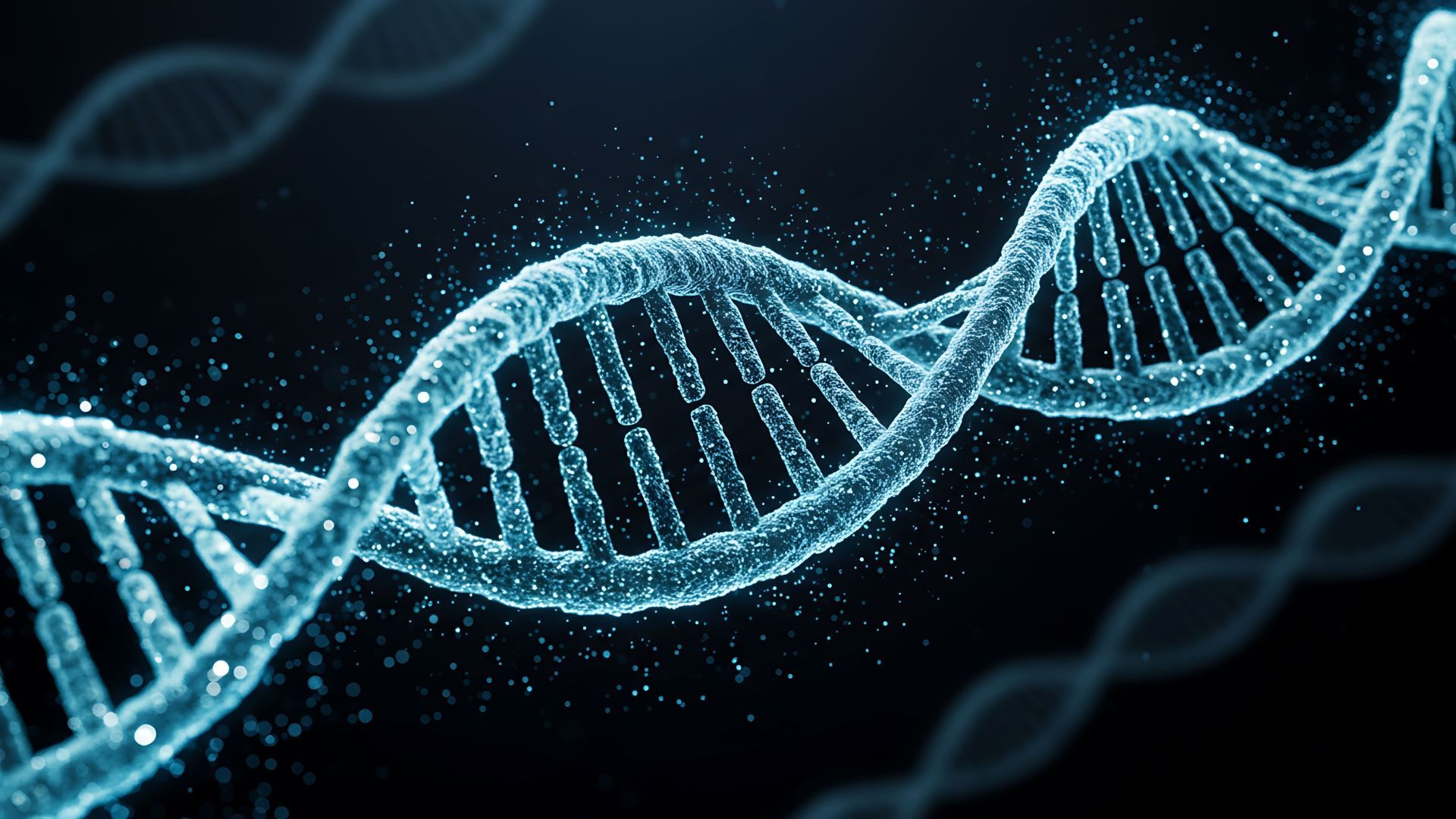
Your genes are the building blocks that shape how your body works. You inherit them from your parents.
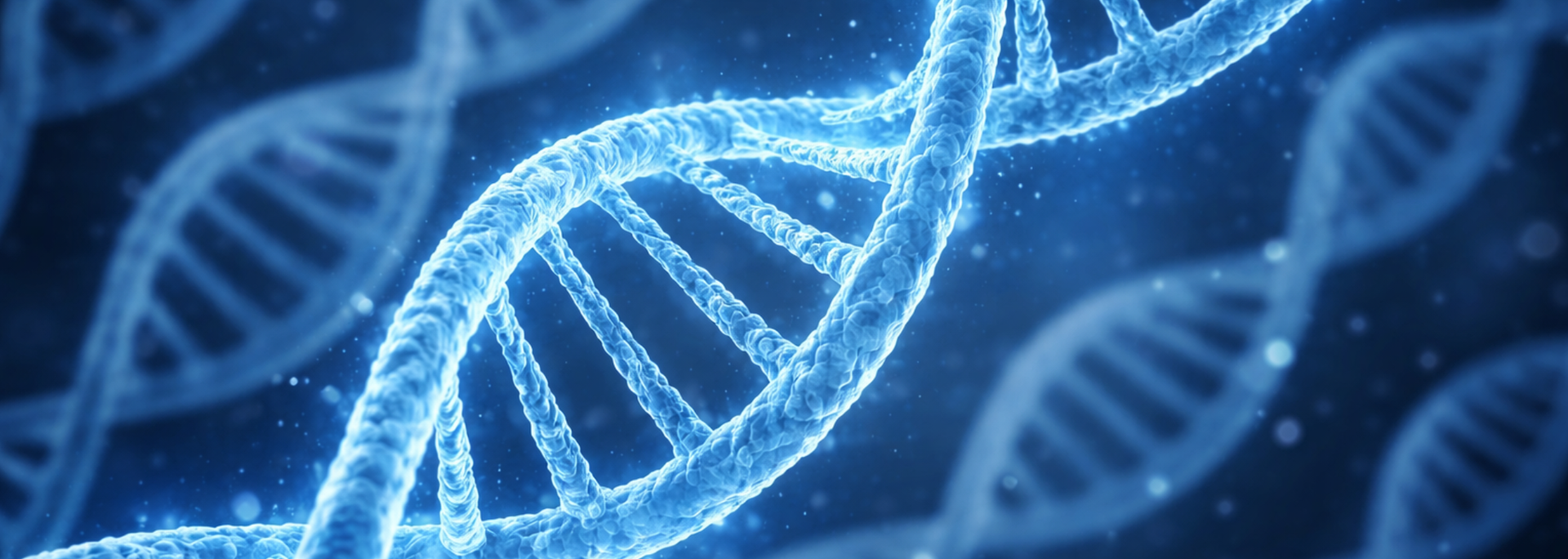
Humans have around 22,500 genes.⁴ Some contain instructions to help the body perform essential functions. Others come in different 'versions', which determine natural traits like:
- Hair, eye and skin colour
- Your biological sex
- Some aspects of your personality
- How likely you are to develop certain medical conditions
There are more than 400 genes associated with obesity.⁵ These can influence things like:
- How the body stores fat
- How quickly you burn calories
- Your appetite
- How satisfied you feel after eating
- Your food preferences
- Your ability to control impulses, such as snacking
It's quite rare for one gene to have a significant effect on our weight. Most of the time, obesity is polygenic, meaning it's the result of multiple genes working in tandem.
In other words, if you inherit the versions of these genes associated with obesity, you're more likely to develop the condition. And the more you inherit, the more likely it is.
That's why we call obesity a hereditary condition – it can be inherited from your parents. In fact, people are six times more likely to develop obesity in middle age if both their parents had the condition at that age.⁶
That doesn't mean genetics alone makes it six times more likely. However, it does suggest there's more at play than lifestyle and environmental factors alone.
What percent of obesity is caused by genetics?
By one estimate, genetics accounts for 'around 40% to 50% of the variability in body weight status'.⁷
In other words, when scientists study large groups of people, about half the differences in body weight can be linked to genetic differences between them.
The word 'groups' is important here. That '40% to 50%' doesn't mean that any one person's weight is 40% to 50% genetic – it's a statistic based on studies of lots of individuals.
Interestingly, though, the further you move towards the higher end of the weight spectrum, the more strongly genetic differences seem to matter. Among groups of people living with obesity or severe obesity, around 60% to 80% of the differences in body weight are linked to genetic variation.⁷

Does this mean some people are 'born with obesity'?
No.
People born with certain versions of certain genes are more likely to gain weight and have a harder time losing it. That's because genes can change the way our bodies work, as well as how we manage impulses and interact with food.
But genes are highly unlikely to be the only factor. Our lifestyles and the environments in which we live can also influence our chances of developing obesity.
Think of it as a recipe. Genetics is one major ingredient, especially in those with a higher body weight. But other ingredients, such as diet, activity, sleep, stress and our environment, also shape the final result.
There are two key things to take away here:
- Obesity is never just 'your fault': with so many factors influencing obesity, from genetics to environment, a person's weight is rarely – if ever – simply a matter of personal lifestyle choices.
- Genes aren't destiny: they influence our weight, but they're only one of many factors at play. With the right support, almost anyone can achieve a healthy weight and enjoy a healthier life – no matter their genetic makeup.
- Semapen: healthy weight loss with expert support
Have you tried diet and exercise, but still find it hard to lose weight?
Here at Semapen, we offer expert-led weight loss programmes with tailored support built in. With help from our team of doctors, dietitians and psychologists, you can expect to:
- Access the latest generation of weight loss medications or dietitian-approved meal replacements (if eligible).
- Get support and feedback to help you keep your weight loss journey on track.
- Learn healthy habits that you'll remember and use for life.
It's easy to get started. Simply
download the Semapen app and take our self-service medical consultation. You'll find out if you're eligible straight away, and our experts will recommend the best weight loss treatments for you.
Sources
1. Phelps, N.H. et al. (2024) "Worldwide trends in underweight and obesity from 1990 to 2022: a pooled analysis of 3663 population-representative studies with 222 million children, adolescents, and adults"
The Lancet, 403(10431)
https://doi.org/10.1016/S0140-6736(23)02750-2
2. Balasundaram, P. & Daley, S.F. (2025) "Public Health Considerations Regarding Obesity" In: StatPearls [Internet]. Treasure Island (FL): StatPearls Publishing. https://www.ncbi.nlm.nih.gov/books/NBK572122/
3. McGrosky, A. et al. (2025) "Energy expenditure and obesity across the economic spectrum" Proceedings of the National Academy of Sciences, 122(29) https://doi.org/10.1073/pnas.2420902122
4. MedlinePlus (2024) What is a gene? Retrieved from https://medlineplus.gov/genetics/understanding/basics/gene/
5. Harvard Medical School (2019) Why people become overweight. Retrieved from https://www.health.harvard.edu/staying-healthy/why-people-become-overweight
6. Mikkelsen, M. et al. (2025) "Tracing Obesity From Parents to Adult Offspring: The Tromsø Study 1994–2016" Journal of Obesity, 8834694 https://doi.org/10.1155/jobe/8834694
7. Bouchard, C. (2021) "Genetics of Obesity: What We Have Learned Over Decades of Research" Obesity, 29(5) https://doi.org/10.1002/oby.23116
This article was reviewed and approved by Lujain Alhassan, Bariatric Nutritionist, on 14 March 2026.
- Average 15-21% weight loss*
- Tailored programmes built by real experts
- Targeted support to make success feel simpler
- Unique app with weight loss tools and lessons
Your journey starts here
Start your personalised weight loss plan in minutes.
1
Start your online consultation
2
Get approved by our clinical team
3
Begin your programme