
Can Mounjaro (tirzepatide) improve heart health?
Ready to take the next step? See if you're eligible for expert-led weight loss support.
Excess weight can increase the risk of heart problems. Could Mounjaro injections help? Explore the key findings of the SUMMIT clinical trial.

It might sound like an odd thing to say, but weight loss isn't just about losing weight.
While everyone's journey is different, it's common to see improvements in sleep quality, fitness and energy levels as the numbers tick down on the scale.
People feel better in themselves, even if they're not sure exactly why. That's because carrying excess weight impacts the body in ways we can't always see.
One of the affected organs is the heart. Medical professionals have long known that living with obesity significantly increases the risk of heart problems – and that losing weight can improve heart health.¹
But can weight loss injections like Mounjaro (tirzepatide) help, too? According to one recent study, the answer may be 'Yes'.
Published in November 2024, the SUMMIT trial found that tirzepatide reduced the rate of worsening problems in people living with obesity and a certain type of heart failure.²
Let's unpack what this all means.
First, what do we mean by 'a certain type of heart failure'?
The SUMMIT trial studied one group of patients, all of whom lived with obesity and heart failure with preserved ejection fraction (HFpEF – pronounced 'huff-puff').
'Ejection fraction' (EF) means how well the heart pumps blood, shown as the percentage of blood squeezed out per beat. A typical healthy EF score is 50% or more.
'Preserved ejection fraction' means the heart is squeezing properly. However, a person can still have heart failure symptoms (such as shortness of breath, fatigue or swelling) because the heart doesn't relax and fill properly between beats.
HFpEF is associated with a higher risk of heart-related complications and is more commonly seen in people living with overweight or obesity.
However, what's most important to keep in mind is that this study only looked at people with HFpEF. That means we can't draw firm conclusions about tirzepatide and other heart conditions.
What we learned in the tirzepatide cardiovascular outcomes trial (SUMMIT)
In the study, 364 patients received up to 15mg of tirzepatide for at least 52 weeks. Meanwhile, another 367 received a placebo (a harmless dummy drug with no clinical effects).²
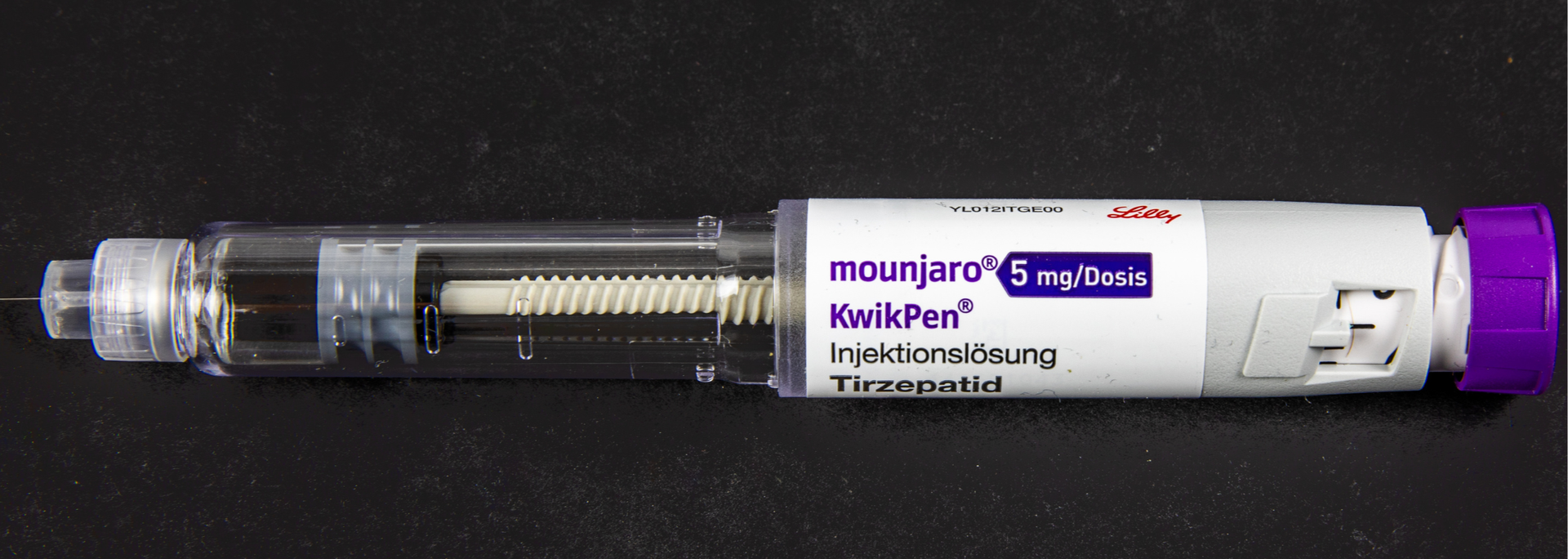
As this was a double-blind study, neither the patients nor the medical professionals knew which treatment a person would receive. This approach helps to prevent bias.
After 52 weeks, researchers found that the tirzepatide group:²
- Were less likely to have heart failure problems that had worsened over the study (8% compared to 14% in the placebo group)
- Saw fewer cardiovascular deaths (1.4% compared to 2.2% in the placebo group)
And it wasn't just medical health that improved. Participants also reported a better quality of life after taking tirzepatide.²
How researchers measured the drug's effectiveness
Researchers used a metric called the 'Kansas City Cardiomyopathy Questionnaire Clinical Summary Score (KCCQ-CSS)'. This questionnaire measures how bad heart failure symptoms are and how much they affect daily life.
On average, participants who took tirzepatide improved their score by 20 points (on a scale from zero to 100).² This is considered a 'large improvement' in clinical thresholds, meaning it was big enough for patients to notice in their everyday lives.
People taking the placebo also saw improvements, but only by about 13 points.²
That 6.9 difference in the score between groups doesn't sound huge. However, in medical terms, it's considered statistically significant and shows that people with HFpEF felt noticeably better after a year of treatment with tirzepatide.
What the results tell us
In short, the study showed that tirzepatide reduced heart failure events and improved quality of life – only for patients living with obesity and HFpEF.
From these results, we can't say whether tirzepatide is similarly effective for people living with other heart conditions. Nor did the study prove that tirzepatide directly improved heart health. Instead, weight loss was likely the main driver of the improvements.
However, the SUMMIT trial was useful because it highlighted tirzepatide's potential as a HFpEF treatment and provided more evidence for medical benefits beyond weight loss. In the world of medicine, more evidence is always a good thing.
SemaPen is a trusted UK clinic specialising in expert-led, non-surgical options for weight loss. For more news and specialist tips, follow our blog.
Sources
1. Powell-Wiley, T.M. et al. (2021) "Obesity and Cardiovascular Disease: A Scientific Statement From the American Heart Association" Circulation, 143(21) https://doi.org/10.1161/CIR.0000000000000973
2. Packer, M. et al. (2024) "Tirzepatide for Heart Failure with Preserved Ejection Fraction and Obesity" The New England Journal of Medicine, 392(5) https://doi.org/10.1056/NEJMoa2410027
This article was reviewed and approved by Lujain Alhassan, Bariatric Dietitian, and Sarah Abdula, Specialist Dietitian, on 5 January 2026.
- Average 15-21% weight loss*
- Tailored programmes built by real experts
- Targeted support to make success feel simpler
- Unique app with weight loss tools and lessons
Your journey starts here
Start your personalised weight loss plan in minutes.
1
Start your online consultation
2
Get approved by our clinical team
3
Begin your programme