
Weight loss diets from the past (and what we've learned since)
Ready to take the next step? See if you're eligible for expert-led weight loss support.
Weight loss diets have been around since at least the mid-1800s. But does this old-timey advice stand up today? Let's find out.

Humans have long understood the link between diet and health.
Take the Ebers Papyrus. Believed to date to the 16th century BC, this 20-metre scroll is packed with hieroglyphic recipes and remedies. Among them, you'll find an anti-diabetic 'diet' consisting of plant fibres, green dates, cucumber flowers, milk and beer.
The Ebers Papyrus is significantly older than the Parthenon, the Tower of London and the United States of America. But you might be surprised to learn that the notion of dieting to lose weight is relatively modern.
Physicians began drawing clear links between weight and well-being in the 19th century, with the first popular weight loss diets following soon after. By the early 1900s, the idea that excess body fat poses significant health risks was fast becoming the medical consensus.
Of course, medicine has come a long way in the last century or so. While there's always more to learn, doctors now have a much better understanding of what causes obesity, its health risks and how to treat it.
With that in mind, let's look back on a couple of history's most influential weight loss diets. Did these early dietitians have the right idea? And what can we learn from their mistakes?
William Banting's low-carb diet from 1863
William Banting wasn't a medical professional – he was an English undertaker and coffin maker. However, he did have first-hand experience of living with obesity.
Determined to lose the weight, Bunting tried a whole host of remedies. 'I have tried sea air and bathing…', he wrote. He had 'taken gallons of physic and liquor potassæ'. He took up walking and horseback riding.¹ Unfortunately, none of these seemed to do the trick.
Frustrated but undeterred, he developed his own diet plan. It consisted of four meals a day, with a heavy focus on meats, fruits and green vegetables.
His diet worked. And in 1863, he published his findings in a now-famous pamphlet called Letter on Corpulence.
It was a huge success. So much so that the word 'banting' – as a synonym for 'dieting' – is still sometimes used today.
What we've learned since
Despite his lack of medical training, some of Banting's ideas were forward-thinking – and many still hold water.
Banting noted that certain foods are high in 'starch and saccharine matter, [which tend] to create fat'.¹
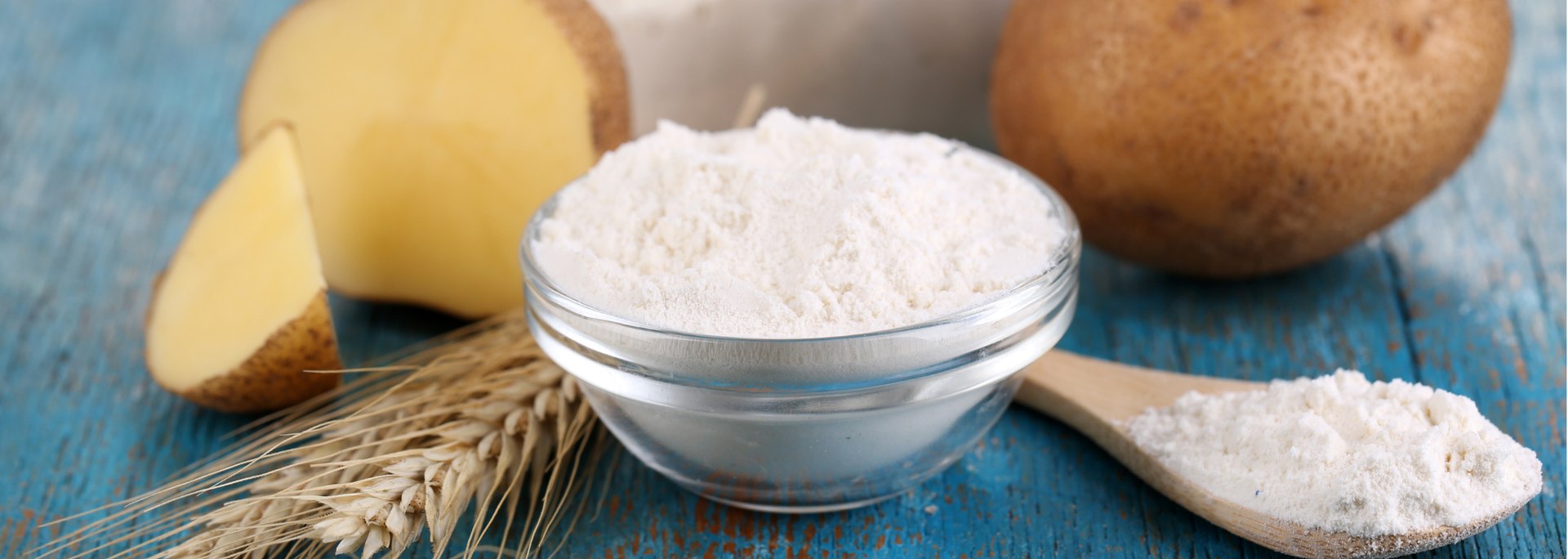
And it's true – starchy foods like white bread and potatoes are high in simple carbohydrates. Eating too many simple carbs causes blood sugar spikes, which lead to energy crashes and increased snack cravings. The same goes for foods with a high sugar content, or what Banting called 'saccharine matter'.
With his Letter on Corpulence, Banting effectively created one of the first low-carb diets. And even today, many diet books advise limiting carbs – or even cutting them out completely.
That's where we'd chime in with a word of warning. See, high-carb foods aren't inherently bad – in fact, they're one of the body's main energy and nutrient sources.
If you want to lose weight safely and sustainably, it's important to maintain a healthy, balanced diet. This means eating the right types of carbs in the right proportions.
Modern dietitians recommend swapping simple (processed) carbs for complex carbs. Think whole grains like oats and quinoa, as well as healthier swaps like brown bread and brown pasta. You should aim to make these foods account for about a third of your overall diet.²
Lulu Hunt Peters' calorie-counting diet from 1918
Lulu Hunt Peters was an American physician and writer who made her name as a dietary expert in the early 20th century.
By the 1910s, Hunt Peters had already gained a loyal following with her featured newspaper column. But her ideas reached a much wider audience with the release of her book, Diet and Health; With Key to the Calories, in 1918.
It would be no exaggeration to claim that Diet and Health changed the face of dieting forever. Through the book, Hunt Peters first popularised the concept of counting calories to lose weight.
Diet and Healthwas a hit. It remained a top 10 bestseller until 1926 and continues to influence health writers today.
What we've learned since
With Diet and Health, Lulu Hunt Peters nailed the basic formula for weight loss as we understand it today. She recognised calories as fuel for the body. And she popularised the notion that when we eat fewer calories than we burn, we lose weight. This is what modern dietitians call a 'calorie deficit'.
That's not the only recommendation that stands up to modern scrutiny. Hunt Peters advised readers that weight loss isn't a one-time fix – it requires ongoing maintenance. And while oversimplified by today's standards, her calorie calculations aren't a million miles away from current guidelines.

However, there are plenty of claims that would make a 21st-century dietitian wince. For one, Hunt Peters frames obesity as a simple problem of laziness or overeating – not a complex societal issue as it's understood today. 'Food, and food only (sometimes plus alcohol)', she wrote, 'maketh fat.'³
Moreover, for Hunt Peters, food was calories. In her world, high-calorie foods were bad and low-calorie foods were good. Plain and simple.
It's true that calories are important. But Hunt Peters overlooks the wider world of nutrition – and in at least one case, is outright hostile towards it.
'Because there are no calories in some of the very vital elements of foods – the vitamines and the mineral salts', she wrote, '…it is not necessary to know about them.'³
Dietitians still recognise calorie counting as a useful tool for weight loss. However, none would claim that it's 'not necessary' to learn about vital nutrients. Today, we've learned that calories must be considered together with food quality, nutritional value, lifestyle and overall metabolic health.
In other words, calories are important – but they're not everything.
Discover modern, clinically proven weight loss treatments from SemaPen
Even today, weight loss is rarely easy. But thanks to modern medical advancements, it's simpler to lose weight now than it's ever been.
At SemaPen, we offer expert-led programmes that harness the latest medical innovations to support healthy, sustainable weight loss:
- Our
Wegovy programme
uses the once-weekly injectable drug semaglutide, alongside tailored clinical support. On average, subscribers lose 15% of their starting weight.⁴
- Our
Mounjaro programme
uses the newer injectable medication, tirzepatide. With our support, subscribers lose around 21% of their starting weight on average.⁵
- The
SemaHealth programme
is our unique drug-free option. Guided by our specialist dietitians, you'll swap daily meals for tasty, nutritionally complete shakes and soups. The average weight loss is between 12% and 15%.⁶
Along the way, you'll enjoy real-time weight tracking and bespoke advice from our team of UK weight loss specialists. For you, that means a more straightforward route to success – and the specialist guidance you need to stay on track.
To find out if you're eligible, you can take our simple, self-service digital consultation. We'll get back to you straight away with tailored treatment options for your unique needs.
Sources
1. Banting, W. (1865) Letter on Corpulence. Mohun & Ebbs. Retrieved from www.gutenberg.org/files/57545/57545-h/57545-h.htm
2. NHS (2022) The Eatwell Guide. Retrieved from https://www.nhs.uk/live-well/eat-well/food-guidelines-and-food-labels/the-eatwell-guide/
3. Hunt Peters, L. (1918) Diet and Health: With Key to the Calories. The Reilly and Lee Co. Retrieved from https://www.gutenberg.org/cache/epub/15069/pg15069.txt
4. Wilding, J.P.H. et al. (2021) "Once-weekly semaglutide in adults with overweight or obesity" The New England Journal of Medicine, 384(11) https://doi.org/10.1056/NEJMoa2032183
5. Jastreboff, A.M. et al. (2022) "Tirzepatide Once Weekly for the Treatment of Obesity" The New England Journal of Medicine, 387(3) https://doi.org/10.1056/NEJMoa2206038
6. Valabhji, J. et al. (2024) "Early findings from the NHS Type 2 Diabetes Path to Remission Programme: a prospective evaluation of real-world implementation" The Lancet, 12(9) https://doi.org/10.1016/S2213-8587(24)00194-3
This article was reviewed and approved by Lujain Alhassan, Bariatric Dietitian, and Sarah Abdula, Specialist Dietitian, on 5 January 2026.
- Average 15-21% weight loss*
- Tailored programmes built by real experts
- Targeted support to make success feel simpler
- Unique app with weight loss tools and lessons
Your journey starts here
Start your personalised weight loss plan in minutes.
1
Start your online consultation
2
Get approved by our clinical team
3
Begin your programme