
Can protein shakes replace meals?
Ready to take the next step? See if you're eligible for expert-led weight loss support.
There's a difference between protein supplements and nutritionally complete meal replacements. Learn what that is and why it's important.
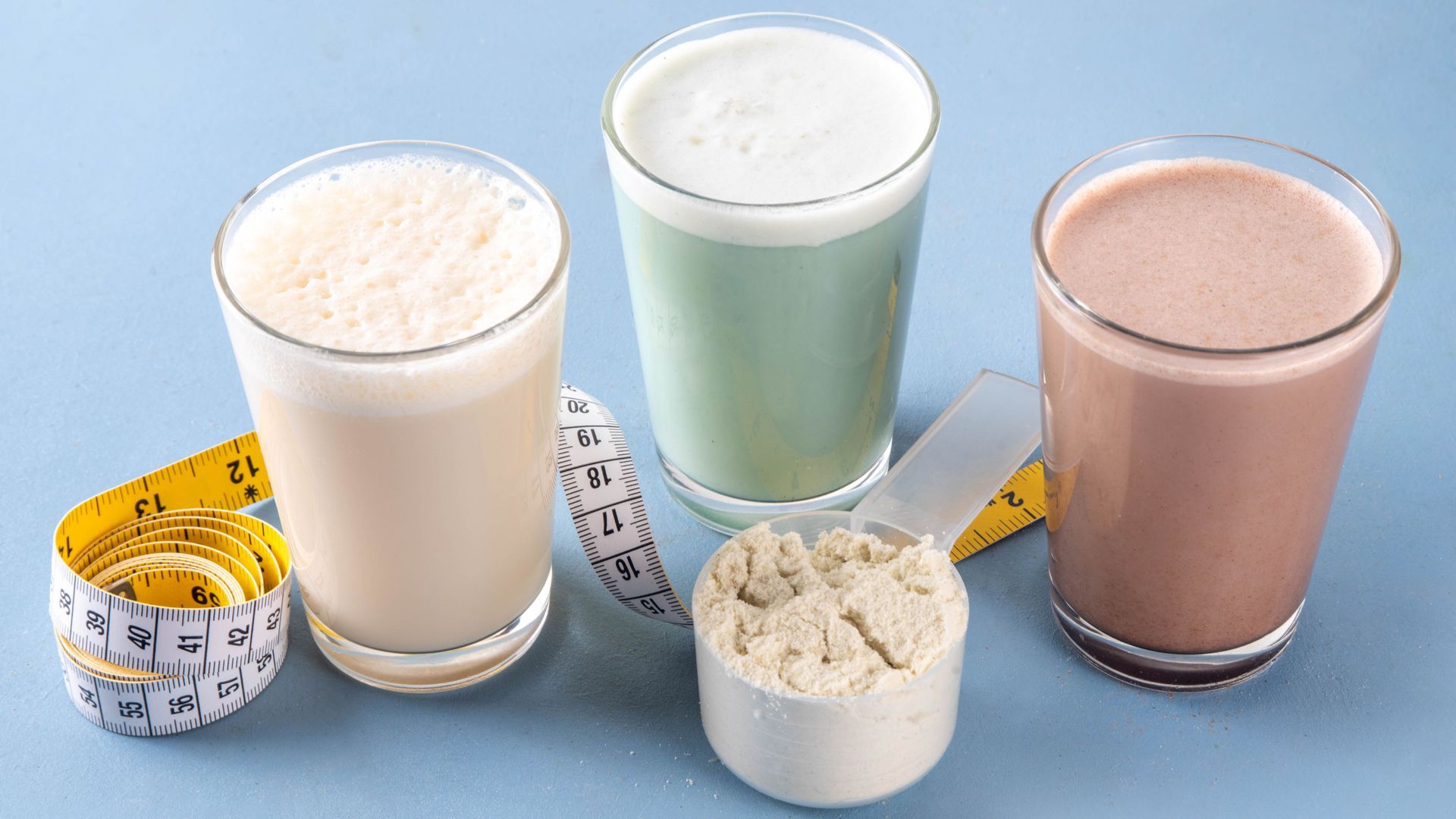
Protein shakes are everywhere.
You'll find tubs of protein powder in supermarkets, pharmacies, gyms and health food shops. Add a scoop to milk or water and, within seconds, you've got a high-protein drink that can be surprisingly filling.
So, if you're trying to lose weight, it might seem logical to take things one step further. Why not replace breakfast or lunch with a protein shake and save yourself a few hundred calories?
The problem is that most protein shakes aren't designed to replace meals.
There's an important difference between a protein supplement and a nutritionally complete meal replacement. And if you're thinking about replacing all or most of your meals with shakes, the difference really matters.
What's the difference between a protein shake and a meal replacement?
A standard protein shake does exactly what the name suggests: it gives you protein.
Most contain whey, casein, soya, pea or another concentrated protein source. Some also contain added vitamins, minerals or other ingredients.
But they're generally designed to supplement your normal diet, not replace it.
That's an important distinction. UK government guidance defines food supplements as products intended to add nutrients to a normal diet.¹ A shake containing plenty of protein can be useful for helping you increase your protein intake, but that doesn't automatically make it a balanced meal.
A properly formulated total meal replacement, meanwhile, is specifically designed to provide the nutrition you need while replacing ordinary food for a limited period.
Here are the differences at a glance.
| Protein shake | Total meal replacement |
|---|---|
| Mainly designed to provide extra protein | Designed to replace ordinary meals |
| Usually taken alongside a normal diet | Can form part or all of a structured diet programme |
| May not contain enough essential fats, carbohydrates, fibre, vitamins or minerals | Formulated to provide a controlled nutritional balance |
| Usually bought and used independently | Should be used within an appropriate structured programme when replacing the whole diet |
Why isn't a protein shake a complete meal?
Protein is important, especially when you're losing weight. It helps maintain muscle, supports normal body functions and can help you feel satisfied after eating.
But your body needs much more than protein.
A healthy diet also provides:
- Carbohydrates for energy
- Essential fats
- Fibre
- Vitamins
- Minerals
- Other nutrients needed for normal health
Depending on the product, an ordinary protein shake may provide very little of several of these.
For example, mixing a scoop of whey protein with water might give you about 20g of protein but very little fibre, essential fat or carbohydrate. It may contain some added vitamins and minerals, but that still doesn't necessarily make it nutritionally complete.
Replacing one normal meal occasionally with a protein shake probably won't cause a nutritional deficiency by itself if the rest of your diet is balanced.
The concern comes when shakes that were never designed as meal replacements start replacing food regularly – particularly several meals every day.
Can I use protein shakes to lose weight?

You can include protein shakes in a weight loss diet.
They're convenient, easy to prepare and can be useful if you struggle to get enough protein from food. Some people also find that a protein shake makes a handy post-exercise snack or a quick option on a busy day.
However, drinking protein shakes doesn't automatically lead to weight loss.
Weight loss happens when you consistently use more energy than you consume. If you drink a shake on top of everything you'd normally eat, you're adding calories rather than removing them.
And if you use a low-calorie protein shake instead of a balanced meal, you may reduce your calorie intake but also miss out on important nutrients.
So, protein shakes can be a useful tool. But they're not a complete weight loss programme on their own.
What makes a proper meal replacement different?
Meal replacements designed for structured weight management are formulated with a much broader nutritional purpose.
This becomes especially important with a total diet replacement (TDR) programme, where ordinary food is temporarily replaced altogether.
NICE has specific guidance for low-energy and very-low-energy diets used to manage obesity. It says these programmes should be nutritionally complete and provided with ongoing clinical support and supervision.²
Very-low-energy diets provide fewer than 800 calories per day. As the name suggests, that's very low. So, they should only be used within specialist weight management services where there's a clinically assessed need for rapid weight loss.
NICE also recommends that low- and very-low-energy approaches last no longer than 12 weeks before ordinary food is reintroduced.²
That's very different from simply buying a large tub of protein powder and deciding to live on shakes.
Why does professional support matter?
The nutritional formula is only part of a meal replacement programme.
Eating very few calories can affect your body in ways that need careful consideration. NICE highlights possible effects including constipation, fatigue and hair loss. Some medications may also need to be reviewed when someone starts a low- or very-low-energy diet.²
Then there's what happens afterwards.
A total meal replacement programme isn't supposed to mean drinking shakes forever. The next stage involves gradually bringing ordinary food back into your diet and building eating habits that make weight loss easier to maintain.
That's one reason proper support is so important.
A structured programme can help you:
- Make sure the diet is appropriate for you
- Monitor how you're responding
- Manage problems or side effects
- Reintroduce ordinary meals gradually
- Develop healthier eating habits for the long term
- Reduce the risk of simply returning to your previous eating patterns afterwards
NICE's review of the evidence found that low- and very-low-energy diets can be effective for weight loss. However, it also emphasised the importance of ongoing support after the initial diet phase.³
What is SemaHealth?

SemaHealth is Semapen's 12-month nutrition programme built around a three-month total meal replacement phase.
During those first three months, normal meals are replaced with four Altralife shakes or soups per day. Together, the four daily portions are nutritionally complete and provide 19g to 22g of protein per serving, alongside fibre and other essential nutrients.
But the shakes aren't the whole programme.
SemaHealth also includes support from qualified dietitians. They're there to keep you on track during the initial meal replacement phase and support the gradual reintroduction of ordinary food afterwards.
You'll also get:
- A 10-month personalised online fitness programme
- A Withings smart scale connected to the Semapen app
- Weight monitoring and tailored advice
- Semapen Academy lessons covering diet, exercise and healthy habits
- Access to the Semapen support team
- A structured 9-month food reintroduction and maintenance phase
Research shows that structured meal replacement programmes can lead to weight loss of 10% to 15% with clinical support.⁴
The bottom line
Protein shakes and meal replacement shakes might look similar in a glass, but they're designed for very different jobs.
A protein shake is primarily a convenient way to add protein to your diet. It isn't usually designed to provide everything your body would normally get from a complete meal.
A nutritionally complete meal replacement is specifically formulated for a different purpose. And when meal replacements are used to replace your whole diet, the programme around them matters just as much as what's in the shake.
Are you considering a structured meal replacement programme? SemaHealth combines nutritionally complete shakes and soups with expert support, digital fitness and practical lessons to help you lose weight and build healthier habits.
It's easy to find out whether SemaHealth could be suitable for you. Simply take our
quick online consultation.
Sources
1. Department of Health and Social Care (2026) Food supplements guidance [guidance]. Retrieved from https://www.gov.uk/government/publications/food-supplements-guidance/food-supplements-guidance
2. National Institute for Health and Care Excellence (2026) Physical activity and diet: Overweight and obesity management [guidance]. Retrieved from https://www.nice.org.uk/guidance/ng246/chapter/Physical-activity-and-diet
3. National Institute for Health and Care Excellence (2026) Rationale and impact: Overweight and obesity management [guidance]. Retrieved from https://www.nice.org.uk/guidance/ng246/chapter/Rationale-and-impact
4. Valabhji, J. et al. (2024) "Early findings from the NHS Type 2 Diabetes Path to Remission Programme: a prospective evaluation of real-world implementation" The Lancet, 12(9) https://doi.org/10.1016/S2213-8587(24)00194-3
This article was reviewed and approved by Lujain Alhassan, Bariatric Nutritionist, on 12 October 2026.
- Average 15-21% weight loss*
- Tailored programmes built by real experts
- Targeted support to make success feel simpler
- Unique app with weight loss tools and lessons
Your journey starts here
Start your personalised weight loss plan in minutes.
1
Start your online consultation
2
Get approved by our clinical team
3
Begin your programme