
Can GLP-1 weight loss injections help with sleep apnoea?
Ready to take the next step? See if you're eligible for expert-led weight loss support.
Obesity is a leading cause of obstructive sleep apnoea. Does that mean weight loss injections can help? Let's look at the evidence.
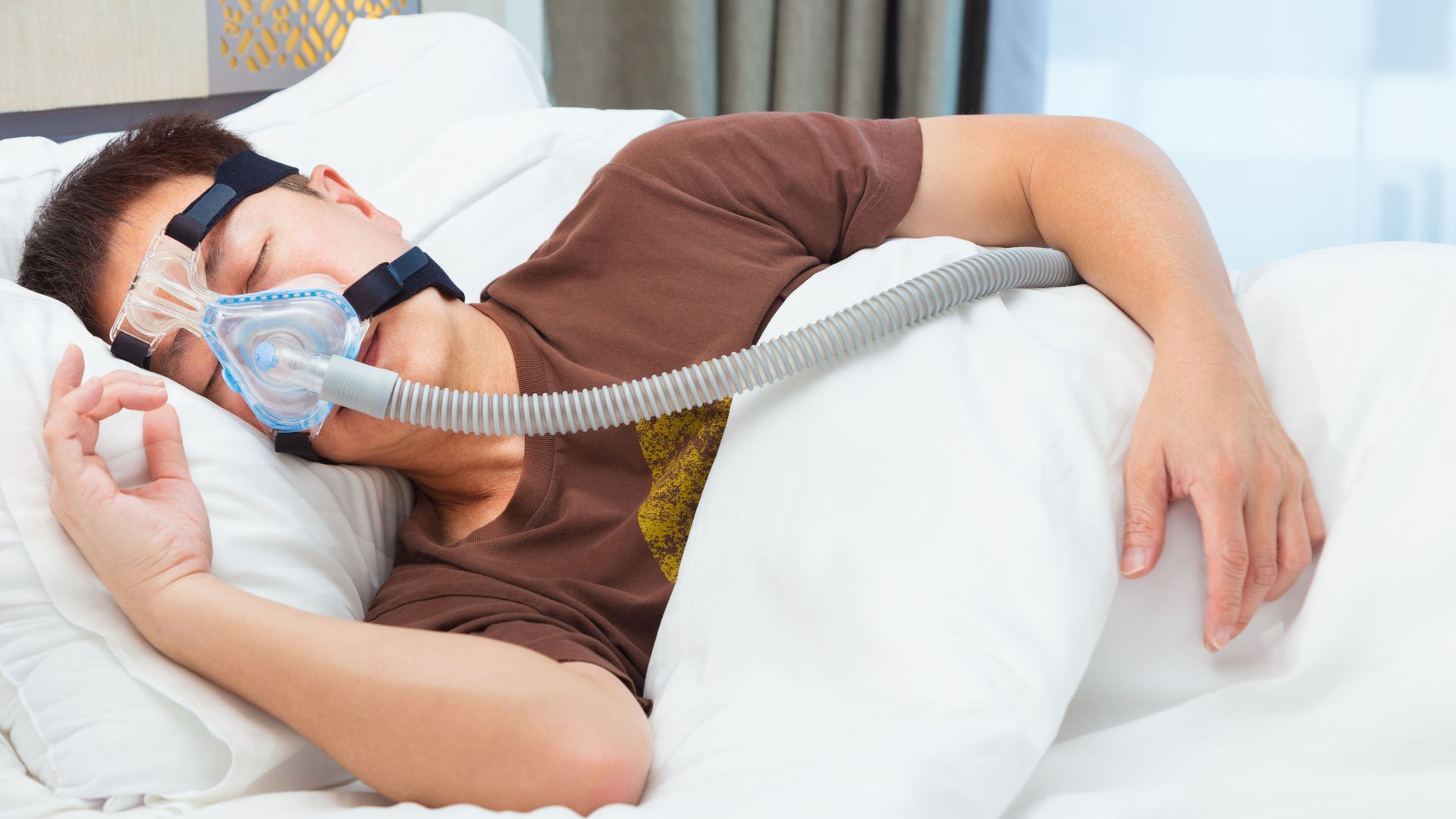
Sleep apnoea is a sleep disorder where breathing starts and stops repeatedly through the night. It's estimated that up to 10 million people in the UK live with obstructive sleep apnoea (OSA) – the most common form of the condition.¹
Several factors can cause sleep apnoea. Some people are simply born with larger tonsils or narrower throats, which can make breathing more difficult during the night. Others develop the condition because of age, lifestyle factors (such as smoking) or genetics.
Obesity can also make sleep apnoea more likely or more severe. One study found that a 10% increase in body weight was associated with a six-fold increase in the risk of OSA.² In another, 63% of male participants and 21% of female participants living with obesity were also living with OSA.³
With that in mind, can injectable weight loss medications help manage sleep apnoea, or even reverse it entirely?
Indirectly, yes. Directly? We're still not sure about that.
Let's look at some of the most recent evidence.
The headline study: weight loss injections substantially reduce sleep apnoea events
In April 2026, the journal Sleep and Breathing published a paper looking at the effects of GLP-1-based weight loss medications on sleep apnoea.
The study was a systematic review and meta-analysis. That means it wasn't based on original research. Instead, the authors looked at data from previous studies to find new patterns and draw new conclusions.
In all, they collated data from four clinical trials that studied the effects of liraglutide (Saxenda) and tirzepatide (Mounjaro) on OSA. Specifically, they looked at the frequency of sleep apnoea events – the temporary pauses in breathing that disrupt sleep.
The researchers found that, on average, sleep apnoea events decreased by around 14 per hour among those taking the medications.⁴
That's significant. Experiencing 30 or more events per hour is classified as 'severe' OSA.⁵ So, that reduction could put a person living with severe OSA into the 'moderate' range (15 to 29.9 events per hour).
It had a real effect on participant well-being, too. Many reported improvements in sleep quality and daytime function (how alert and capable they felt the next day).
Does this mean weight loss injections directly affect sleep apnoea?
No. The study didn't prove that weight loss injections have a direct, drug-related effect on sleep apnoea. It simply demonstrated that those taking the medications experienced fewer sleep apnoea events at night.
What's most likely happening is that the medications help people lose weight, and losing weight leads to sleep apnoea improvements.
However, the researchers did discuss other effects which could, theoretically, contribute to the improvements they observed. That includes reductions in central adiposity (belly fat), reduced inflammation and improved metabolic function.
We'd need further research to know for sure, though.
Can I get weight loss medication for sleep apnoea?
Right now, GLP-1 medications can't be prescribed solely as a treatment for sleep apnoea. Mounjaro and Wegovy, for instance, are only approved as treatments for obesity and type 2 diabetes.
However, as we've seen, if you're living with obesity and sleep apnoea, there's a good chance they could help you manage both.
Semapen is a UK provider of clinically supported weight loss treatments.
Follow our blog
for weight loss tips, nutrition advice and the latest GLP-1 news.
Sources
1. Sleep Apnoea Trust (n.d.) Research: How Many People in the UK Have Obstructive Sleep Apnoea (OSA)? Retrieved from https://sleep-apnoea-trust.org/research/
2. Peppard, P.E. et al. (2000) "Longitudinal study of moderate weight change and sleep-disordered breathing" JAMA, 284(23) https://doi.org/10.1001/jama.284.23.3015
3. Tufik, S. et al. (2010) "Obstructive sleep apnea syndrome in the Sao Paulo Epidemiologic Sleep Study" Sleep Medicine, 11(5) https://doi.org/10.1016/j.sleep.2009.10.005
4. Dandamudi, M. et al. (2026) "Efficacy of GLP-1 Receptor agonists in treating Obstructive sleep apnea: A systematic review and meta-analysis of cardiometabolic and respiratory outcomes" Sleep and Breathing, 30(2) https://doi.org/10.1007/s11325-026-03681-4
5. Blackman, A. et al. (2016) "Effect of liraglutide 3.0 mg in individuals with obesity and moderate or severe obstructive sleep apnea: the SCALE Sleep Apnea randomized clinical trial" International Journal of Obesity, 40,1310–1319 https://doi.org/10.1038/ijo.2016.52
This article was reviewed and approved by Lujain Alhassan, Bariatric Nutritionist, on 26 September 2026.
- Average 15-21% weight loss*
- Tailored programmes built by real experts
- Targeted support to make success feel simpler
- Unique app with weight loss tools and lessons
Your journey starts here
Start your personalised weight loss plan in minutes.
1
Start your online consultation
2
Get approved by our clinical team
3
Begin your programme