
What is the best non-surgical weight loss procedure for me?
Ready to take the next step? See if you're eligible for expert-led weight loss support.
Non-surgical weight loss procedures may help you lose weight without conventional surgery. Learn about your options and which might suit you.

If you're living with obesity and have found it difficult to lose weight, it may be worth exploring non-surgical weight loss methods.
Several options are available, from minimally invasive procedures like swallowable gastric balloons to weight loss injections like
Wegovy and
Mounjaro.
In this guide, we look at some of the most common methods and their pros and cons. That way, you have the facts you need to approach your medical team with confidence.
Non-surgical weight loss procedures
Non-surgical weight loss procedures are an alternative to bariatric (weight loss) surgery. Like bariatric surgery, they involve reducing the stomach's volume so you feel full much faster. However, unlike bariatric surgery, they don't involve large surgical incisions or permanent alterations to organs.
That tends to mean fewer risks and a shorter recovery time. And if you're anxious about surgery, they might feel less intimidating.
However, while these options are sometimes called 'minimally invasive' procedures, that doesn't mean they're as quick and painless as a dental check-up. While you shouldn't feel any pain during the procedure, they can involve intense and uncomfortable recovery periods. And, like any medical procedure, they're not completely risk-free.
That's why it's important to consider all the facts before discussing these procedures with your medical team. It's not a decision to take lightly, but for the right person, they can yield substantial and long-lasting weight loss.
Endoscopic sleeve gastroplasty (ESG)
What's involved
A doctor passes a thin, flexible tube with a camera down your throat into your stomach. Using a special tool attached to the camera, they place stitches along the stomach wall and then pull them tight like an accordion. This folds the stomach inward, reshaping it into a small, narrow sleeve and reducing its volume by about 70%.
You'll be asleep (under general anaesthetic) for the whole procedure, which takes 60 to 90 minutes. Most people go home on the same day.
How to prepare
You must fast (eat and drink nothing) for at least eight to 12 hours before the procedure. Your doctor might also put you on a clear liquid diet for a few days beforehand.
The recovery phase
It's very common to experience a sore throat, cramping and nausea for the first three to five days after the procedure. It will take around four to six weeks for your stomach to fully heal, during which time you'll follow a strict liquid-to-soft-food diet transition.
Is it reversible?
An ESG is technically reversible because no stomach tissue is removed. However, it's not designed to be easily reversed. Instead, doctors are more likely to recommend conversion – a procedure where they convert the ESG into a full gastric sleeve or bypass.
Typical results
In a 2020 study, ESG patients maintained an average total weight loss of 15.9% after five years.¹
Intragastric balloon
What's involved
As with an ESG, a doctor passes a tube with a camera down your throat into your stomach. They slide a small, deflated silicone balloon down the tube. Once they see it's in your stomach, they fill the balloon with a sterile saline fluid until it's about the size of a grapefruit. This reduces stomach volume by about 33% to 60%.
You'll likely stay awake during the operation, but will be given painkillers and sedatives to keep you comfortable. The procedure takes about 20 minutes, and most people go home within a few hours.
How to prepare
You'll start taking prescription pills to block stomach acid a week or two before the procedure. You must follow a clear liquid diet for two or three days prior, and fast completely from the night before.
The recovery phase
The first three to seven days are often quite uncomfortable. You'll likely experience heavy nausea, vomiting and cramping. This is because your stomach is trying to digest the balloon.
After around seven days, your stomach should adapt, and you can carry on with normal activities.
Is it reversible?
Yes. Standard gastric balloons are only designed to stay in place for six months before they must be removed. Newer balloons can safely remain in the stomach for up to 12 months.
Typical results
A 2026 study reported a 13.7% total average weight loss among gastric balloon patients after six months.²
Swallowable pill balloons
What's involved
There's no surgery and no complex equipment. You simply swallow a vegetarian capsule about the size of a large vitamin pill. The capsule is attached to a long, very thin tube.
The doctor will confirm that the capsule has reached your stomach with an X-ray. They'll then fill the balloon with fluid and gently pull out the tube to seal the balloon.
You'll be awake during the whole procedure. Typically, no painkillers or sedatives are needed. It takes about 15 minutes, and you can walk straight out of the clinic afterwards.
How to prepare
You must take stomach acid-blocking medication for a few days prior and eat nothing for six to eight hours before the procedure.
Recovery time
As with the standard balloon, you'll likely experience cramping, nausea and vomiting as your stomach adjusts. These symptoms typically subside to comfortable levels after about three or four days.
Is it reversible?
Yes, and no follow-up procedure is needed. The balloon is designed to naturally break down and exit the body after about four months.
Typical results
A 2025 study found that patients who took a swallowable balloon lost an average of 13.9% of their starting weight after 16 weeks. The patients maintained 95% of that weight loss after one year.³
Are non-surgical weight loss procedures available on the NHS?
ESG and gastric balloon procedures are not routinely available on the NHS. While some NHS trusts may fund or offer the treatments on occasion, it's rare. And even then, you must meet strict Tier 3 or Tier 4 weight management criteria to qualify.
It's much more common for patients to pursue treatment from specialist private healthcare clinics. These typically deliver a wider range of procedures, shorter waiting times and more flexible treatment criteria.
Generally speaking, to qualify for private treatment, you must:
- Have a body mass index (BMI) of 35 or greater
- Alternatively, have a BMI of 30 or greater alongside certain weight-related health conditions such as high blood pressure or type 2 diabetes
- Have tried and failed to lose weight with conventional methods
- Undergo a thorough medical evaluation to make sure the treatment is suitable
For the best results, your clinic should also offer a package of lifestyle coaching and aftercare to help you build healthy habits and monitor progress.
Semapen is part of the Phoenix Health Group. Phoenix Health offers minimally invasive treatments like swallowable gastric balloons, alongside tailored nutritional coaching, progress monitoring and ongoing lifestyle advice.
Other non-surgical weight loss methods
Not all medical weight loss methods involve a procedure. Options like
injectable weight loss medications and
total diet replacement programmes can help you lose weight without any need to visit a clinic.
Injectable weight loss medications
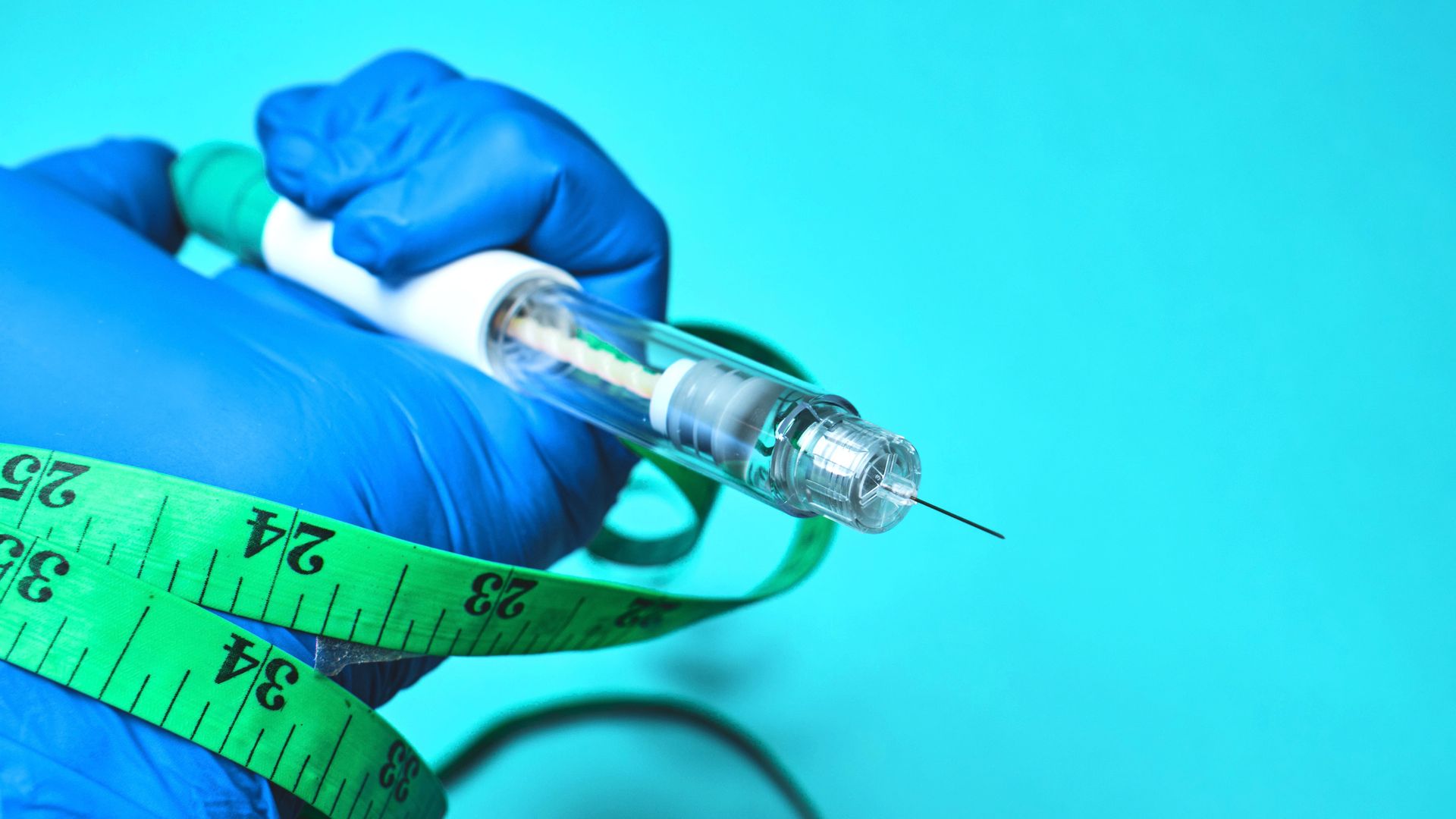
You've probably heard of injectable weight loss medications such as Wegovy and Mounjaro.
These medications come as injections that you take once weekly. They work by mimicking natural 'hunger hormones' involved in appetite regulation and blood sugar control.
By mimicking these hormones, the medications can:
- Control appetite
- Make you feel full for longer by slowing gastric emptying (food leaving the stomach)
- Make it easier to control food cravings by regulating blood sugar
For the right person, they can be very effective – more effective, in some cases, than certain weight loss procedures. In key clinical trials:
- Mounjaro users lost an average of 21% of their starting body weight over 72 weeks⁴
- Wegovy users lost an average of 15% over 68 weeks⁵
The medications are available privately or on the NHS (with restrictions). To qualify for private treatment, you must have a BMI of 30 or greater – though the cutoff can be lowered in certain cases.
Learn more about
Wegovy and
Mounjaro and who qualifies for treatment.
Total diet replacement programmes
Are you looking for a weight loss treatment that involves no procedures or medications? A total diet replacement programme might be right for you.
Total diet replacement involves swapping all your usual meals for nutritionally complete alternatives, such as soups and shakes. After a period of total replacement, you start reintroducing typical foods.
Along the way, expert dietitians will guide and advise you. It's their job to make sure you stay healthy and stay on track as you adjust to your new diet regimen.
Total diet replacement works because it strictly limits calories while providing all the right nutrients. For some, this structure can be very helpful for losing weight and maintaining willpower.
At Semapen, we offer a total diet replacement programme called
SemaHealth. It's designed and led by UK experts and leads to an average weight loss of 10% to 15%.⁶
What you get with Semapen
Semapen is a UK-based provider of clinically guided weight loss treatments, including weight loss injections and total diet replacement.
What makes us different is the level of support and care we provide. While many online pharmacies offer little more than medication, we deliver a complete package of ongoing support. That includes:
- A unique app where you can track your progress and check in with our team
- Smart scales that automatically upload your weight to the app
- Exclusive content to learn healthy habits, including weight loss, mindfulness and fitness lessons in the Semapen Academy
- A 10-month, tailored online fitness programme (with certain care plans)
- Access to ongoing clinical and customer support
Would you like to learn if you're eligible for our treatments? It's easy to get started. Just take a quick
online consultation. If you qualify, we'll let you know which treatments are suitable right away.
Sources
1. Sharaiha, R.Z. et al. (2020) "Five-Year Outcomes of Endoscopic Sleeve Gastroplasty for the Treatment of Obesity" Clinical Gastroenterology and Hepatology, 19(5) https://doi.org/10.1016/j.cgh.2020.09.055
2. Elçi, M. & Ebik, B. (2026) "The Role of Intragastric Balloon Application in Non-Surgical Management of Obesity: Efficacy, Tolerance, and Complications" Journal of Uludağ University Medical Faculty, 52:1807960 https://doi.org/10.32708/uutfd.1807960
3. Caballero, A. et al. (2025) "Weight Loss Maintenance 1 Year after the Swallowable Gastric Balloon: Results from an International Multicenter Study" Obesity Surgery, 35(9) https://doi.org/10.1007/s11695-025-08074-2
4. Jastreboff, A.M. et al. (2022) "Tirzepatide Once Weekly for the Treatment of Obesity" The New England Journal of Medicine, 387(3) https://doi.org/10.1056/NEJMoa2206038
5. Wilding, J.P.H. et al. (2021) "Once-Weekly Semaglutide in Adults with Overweight or Obesity" The New England Journal of Medicine, 384(11) https://doi.org/10.1056/NEJMoa2032183
6. Valabhji, J. et al. (2024) "Early findings from the NHS Type 2 Diabetes Path to Remission Programme: a prospective evaluation of real-world implementation" The Lancet, 12(9) https://doi.org/10.1016/S2213-8587(24)00194-3
This article was reviewed and approved by Lujain Alhassan, Bariatric Nutritionist, on 27 August 2026.
- Average 15-21% weight loss*
- Tailored programmes built by real experts
- Targeted support to make success feel simpler
- Unique app with weight loss tools and lessons
Your journey starts here
Start your personalised weight loss plan in minutes.
1
Start your online consultation
2
Get approved by our clinical team
3
Begin your programme