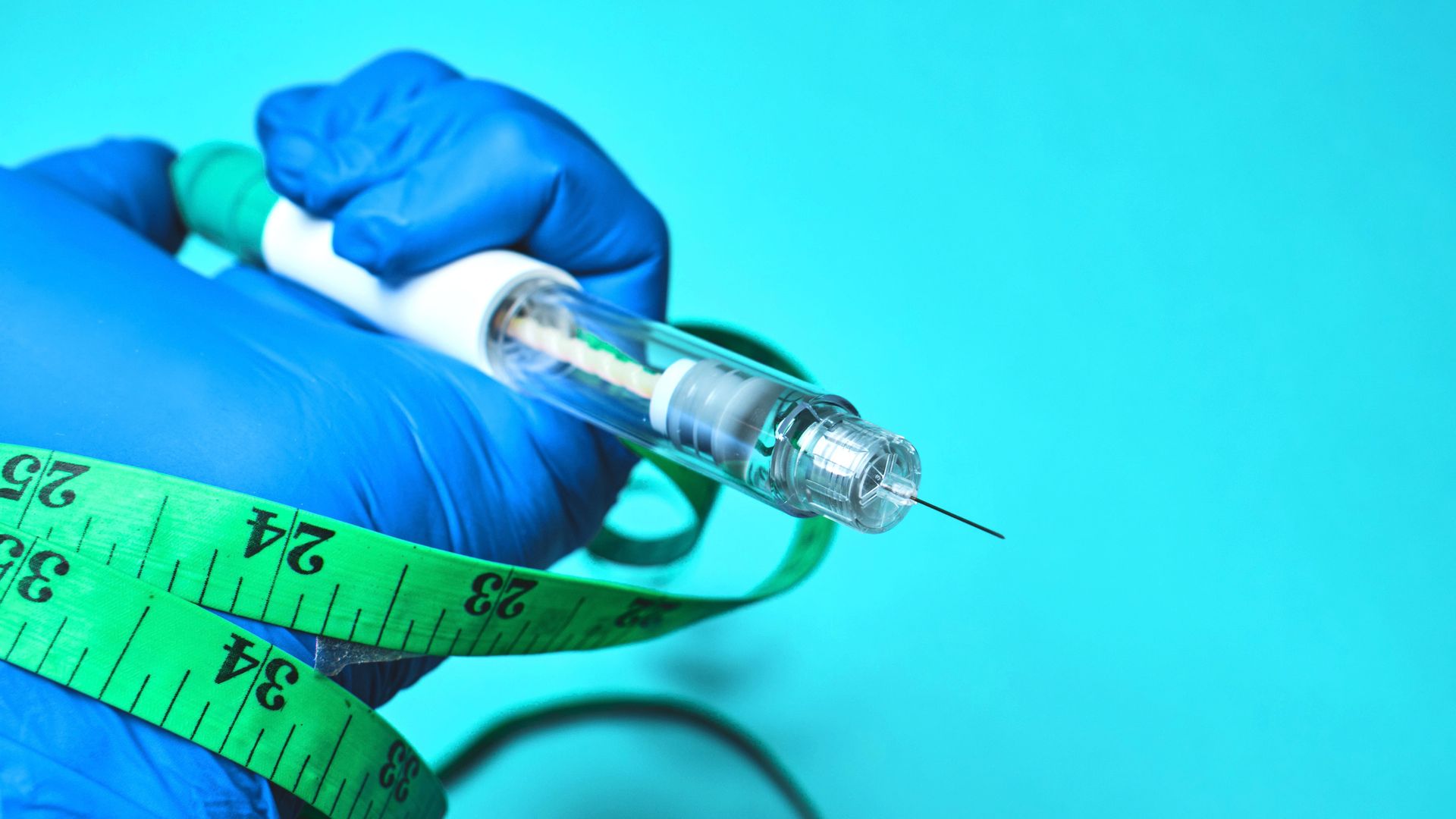

Avexitide explained: a new GLP-1 drug that works very differently
Ready to take the next step? See if you're eligible for expert-led weight loss support.
A new GLP-1 drug called 'avexitide' is in development, but it works very differently from Wegovy and Mounjaro. Get the facts in our guide.

If you've been following the news on weight loss medications, you might have come across a new name: avexitide.
But don't add it to your list of potential Wegovy or Mounjaro alternatives just yet.
Like Wegovy and Mounjaro, avexitide is a GLP-1 drug. However, it's not designed for weight loss and works very differently from those medications.
In fact, you could say it works in the opposite way to drugs like Wegovy and Mounjaro.
Confused? Here's everything you need to know about avexitide in three minutes.
What is avexitide and what's it for?
Avexitide is an injectable GLP-1 medication under development by US drugmaker Amylyx Pharmaceuticals.
Unlike approved GLP-1 drugs like Wegovy and Mounjaro, avexitide is not designed to cause weight loss. Instead, it's being developed to treat a specific condition: post-bariatric hypoglycemia (PBH).
PBH is a rare but serious complication of bariatric (weight loss) surgery. It causes dangerous low-blood-sugar episodes in patients who have undergone surgery.
How does avexitide work?
Despite being a GLP-1 drug, avexitide works very differently from Wegovy and Mounjaro.
Those well-known weight loss drugs are GLP-1 receptor agonists. They stimulate cellular receptors in the body by mimicking GLP-1, a natural hormone.
Essentially, the body acts like it's produced more GLP-1 than usual. Because GLP-1 is involved in appetite regulation, the medications increase feelings of fullness and satisfaction.
But avexitide does the opposite. It's a GLP-1 receptor antagonist, meaning it blocks GLP-1 receptors.
Why would you want to do that? Well, GLP-1 has more jobs than just regulating appetite. It also plays a key role in blood sugar control.
With PBH, the body can overproduce certain hormones, including GLP-1. And when there's too much GLP-1, blood sugar can drop dramatically.
The idea is that by blocking the GLP-1 receptors, avexitide can help limit these dangerous blood sugar slumps.
And according to recently released data, it works rather well.
How well does avexitide work?

Avexitide isn't yet approved anywhere for the treatment of PBH or any other condition.
However, the Phase 3 clinical trial for avexitide has recently concluded.¹ A phase 3 trial is the final phase before a drug can be approved to be sold and used.
On 18 August 2026, Amylyx published the topline results from that trial – and, broadly speaking, they were very positive.
The trial followed 78 adults living with PBH following Roux-en-Y bariatric surgery. After administering a once-daily dose of avexitide for 16 weeks, they saw the rate of significant low-blood-sugar episodes reduce by 55% compared to placebo.
A placebo is a dummy drug that researchers give to establish a baseline for their results.
Does avexitide cause weight gain?
So, avexitide blocks GLP-1 receptors, while Wegovy and Mounjaro activate them.
It's basically doing the opposite. Does that mean it will have the opposite effect? Will avexitide cause weight gain instead of weight loss?
We're still waiting for the full study to be published, but right now it looks unlikely.
In its news story announcing the Phase 3 trial results, Amylyx reported 'no changes in body weight' among any of the participants.²
That's supported by results from an earlier Phase 2 trial. In that study, researchers wrote that they observed 'no clinically significant changes […] in body weight'.³
However, avexitide isn't designed as a weight loss medication, so weight changes haven't been a major focus of studies so far. We'll need to wait for more detailed long-term data to know if there are any meaningful effects on body weight.
The short version
- Avexitide is a GLP-1 drug that targets a specific condition called 'PBH'. It's not designed to cause weight loss.
- It's almost the opposite of Wegovy and Mounjaro: it blocks GLP-1 receptors rather than activating them.
- Phase 3 trial results have shown a positive effect for people living with PBH.
- The drug doesn't appear to cause weight loss or weight gain.
Semapen is a UK-based provider of clinically guided weight loss treatments. For more news and tips, follow our blog.
Sources
1. Amylyx Pharmaceuticals (2026) Amylyx Pharmaceuticals Reports Second Quarter 2026 Financial Results [news story]. Retrieved from
https://www.amylyx.com/news/amylyx-pharmaceuticals-reports-second-quarter-2026-financial-results
2. Amylyx Pharmaceuticals (2026) Amylyx Pharmaceuticals Announces Positive Topline Results from Phase 3 LUCIDITY Clinical Trial of Avexitide in Post-Bariatric Hypoglycemia [news story]. Retrieved from
https://www.amylyx.com/news/amylyx-pharmaceuticals-announces-positive-topline-results-from-phase-3-lucidity-clinical-trial-of-avexitide-in-post-bariatric-hypoglycemia
3. Craig, C.M. et al. (2021) "PREVENT: A Randomized, Placebo-controlled Crossover Trial of Avexitide for Treatment of Postbariatric Hypoglycemia"
The Journal of Clinical Endocrinology & Metabolism, 106(8)
https://doi.org/10.1210/clinem/dgab103
This article was reviewed and approved by Lujain Alhassan, Bariatric Nutritionist, on 27 August 2026.
- Average 15-21% weight loss*
- Tailored programmes built by real experts
- Targeted support to make success feel simpler
- Unique app with weight loss tools and lessons
Your journey starts here
Start your personalised weight loss plan in minutes.
1
Start your online consultation
2
Get approved by our clinical team
3
Begin your programme