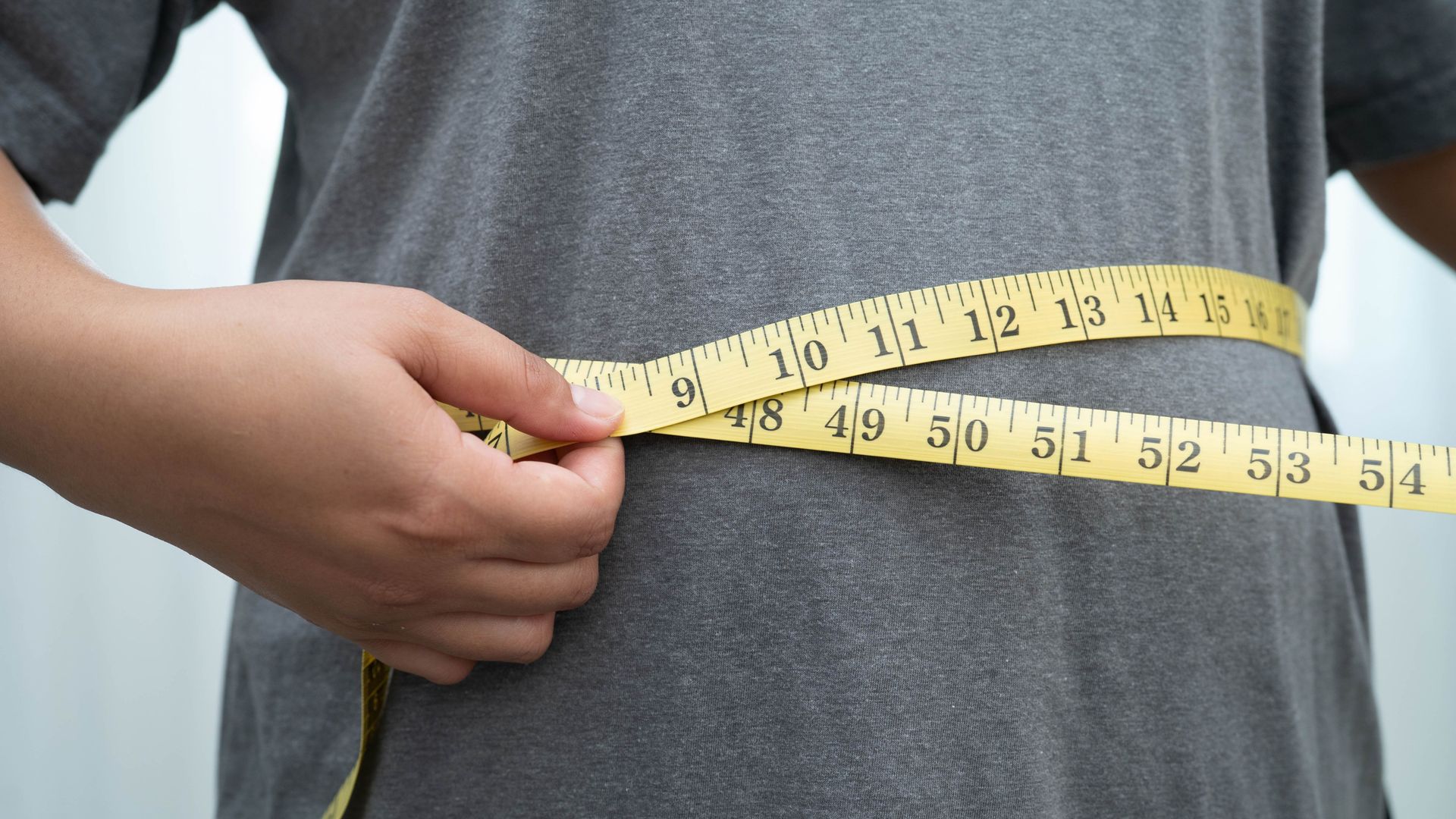

Visualising your success: weight loss compared to objects
Ready to take the next step? See if you're eligible for expert-led weight loss support.
Seeing weight loss compared to objects can help you understand and celebrate your progress. Visualise success with these simple comparisons.
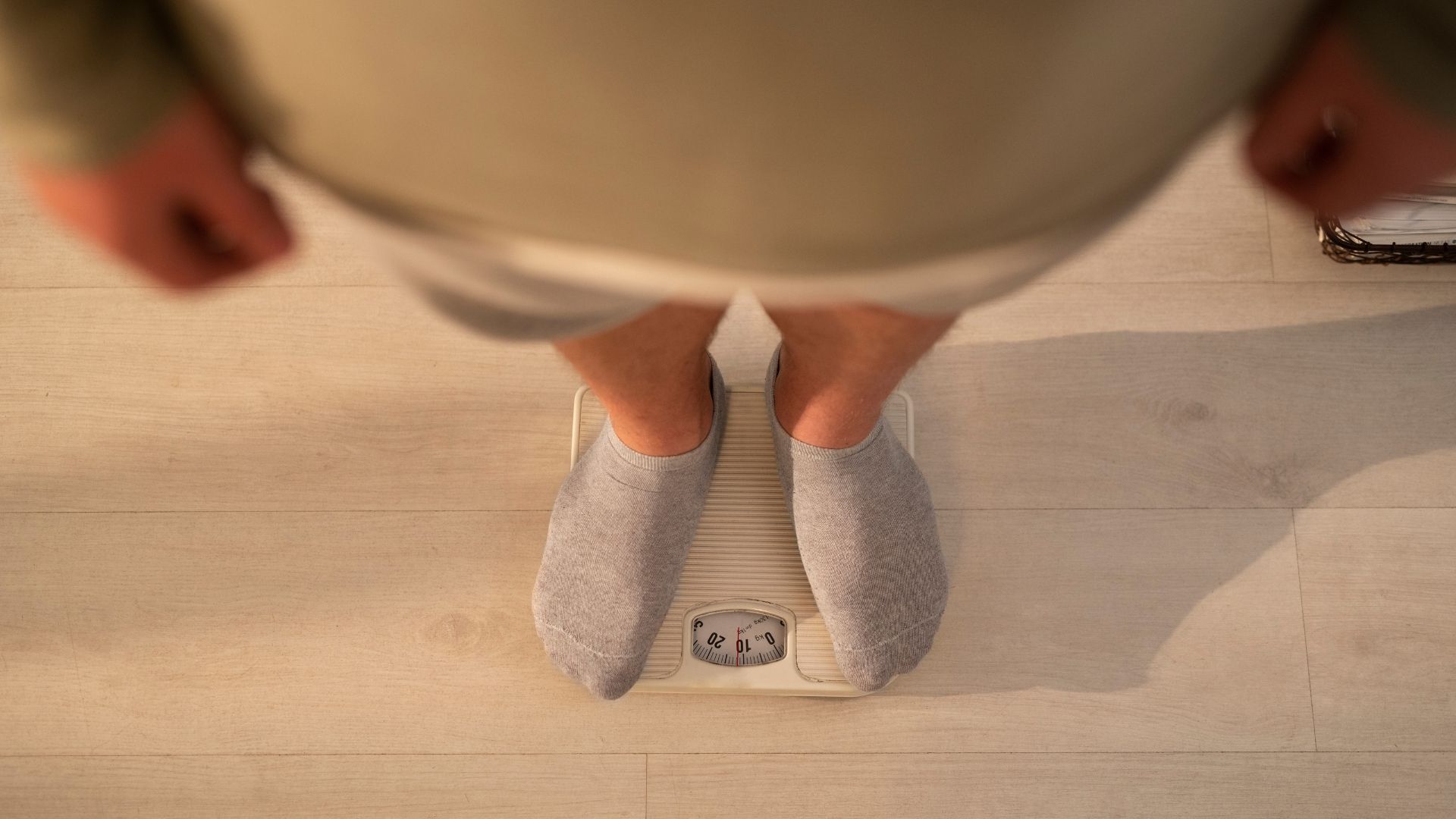
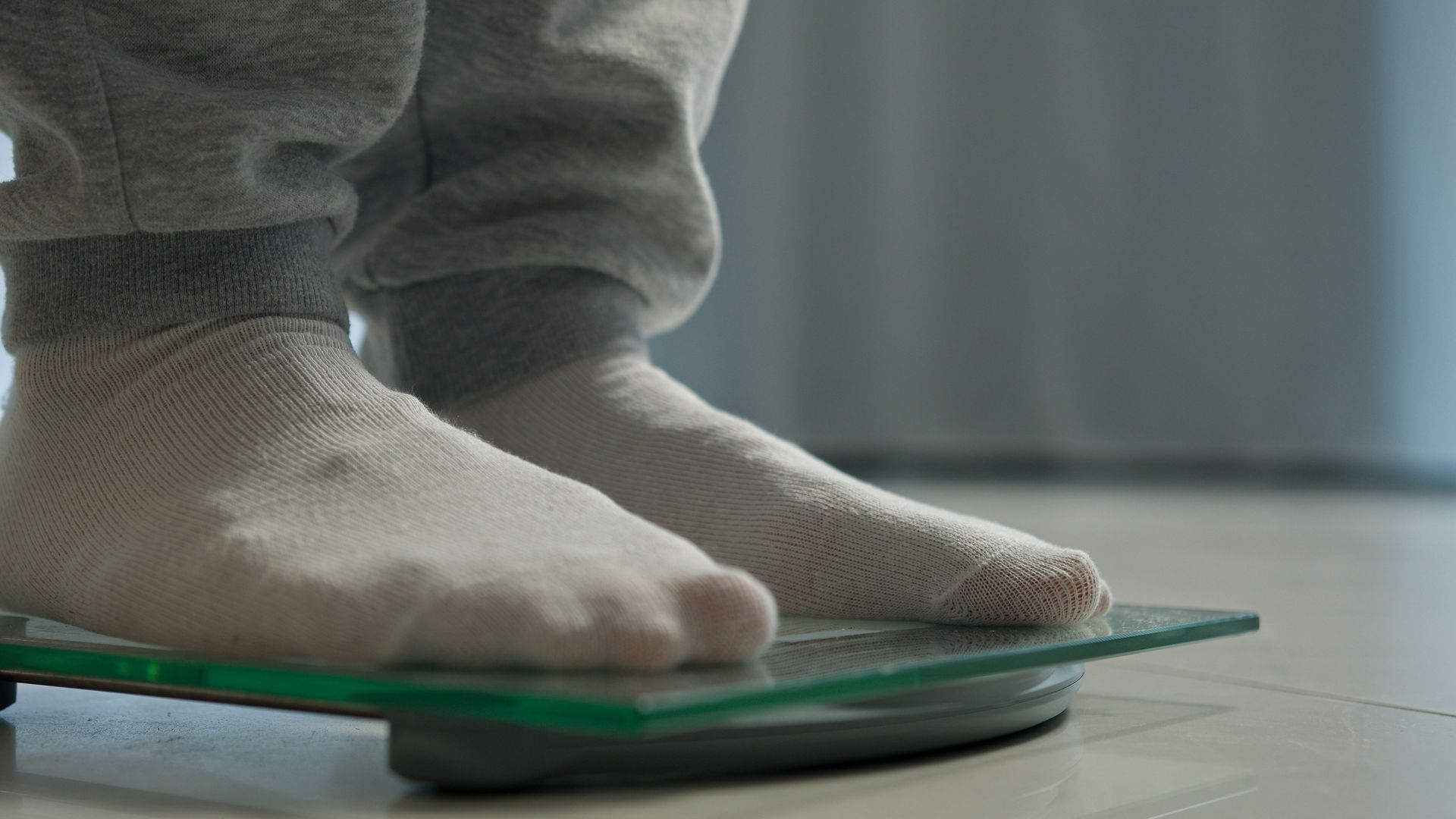
When you're trying to lose weight, the scale can sometimes feel like a set of cold, meaningless numbers.
You might see a drop of seven pounds or three kilograms – but what does that actually mean in real-life terms?
That's where object comparisons can be useful. Comparing your weight loss with everyday items can make the numbers on the scale easier to get your head around.
Look at it this way: would it make you happy to know you've lost the weight equivalent of a bag of flour? A sack of potatoes?
You're not alone. Many people find that visualising their weight loss through everyday objects helps keep them motivated. Plus, it can be pretty fun!
Let's learn why it works and look at some simple comparisons to help you understand your success.
Why visualising weight loss helps
With only numbers on a screen to go by, you may feel disconnected from your weight loss. But if you discover you've lost the equivalent of, say, a small bowling ball, it can be much easier to picture your progress.
Psychologists often highlight the power of visualisation when it comes to motivation. Reaching a goal and having it represented visually can make it feel more real – a physical manifestation of your success. It can also help keep you on track when determination wavers.
When you're trying to lose weight and progress is measured gradually, weight loss object comparisons can also act as milestones. Lost the equivalent of a pumpkin? Pick one up the next time you're in the supermarket to remind yourself how far you've come.
Sharing those milestones can also strengthen support from friends and family. Saying 'I've lost the weight of a large watermelon' might get more of an appreciative response than quoting cold, hard kilograms.
Weight loss compared to objects you know

Need some inspiration? Here are some everyday weight loss object comparisons to help you visualise your progress.
| Imperial | Metric | Equivalent to… |
|---|---|---|
| 1 pound | 0.45 kilograms | A loaf of bread |
| 3⅓ pounds | 1.5 kilograms | A bag of flour |
| 5 pounds | 2.3 kilograms | A laptop |
| 10 pounds | 4.5 kilograms | A pumpkin |
| 14 pounds | 6.3 kilograms | A small bowling ball |
| 20 pounds | 9 kilograms | A watermelon |
| 35 pounds | 16 kilograms | A microwave |
| 45 pounds | 20.4 kilograms | A standard Olympic barbell |
| 56 pounds | 25 kilograms | A sack of potatoes |
How would you celebrate losing the weight of a whole Olympic barbell?
Visualising weight loss with Wegovy or Mounjaro
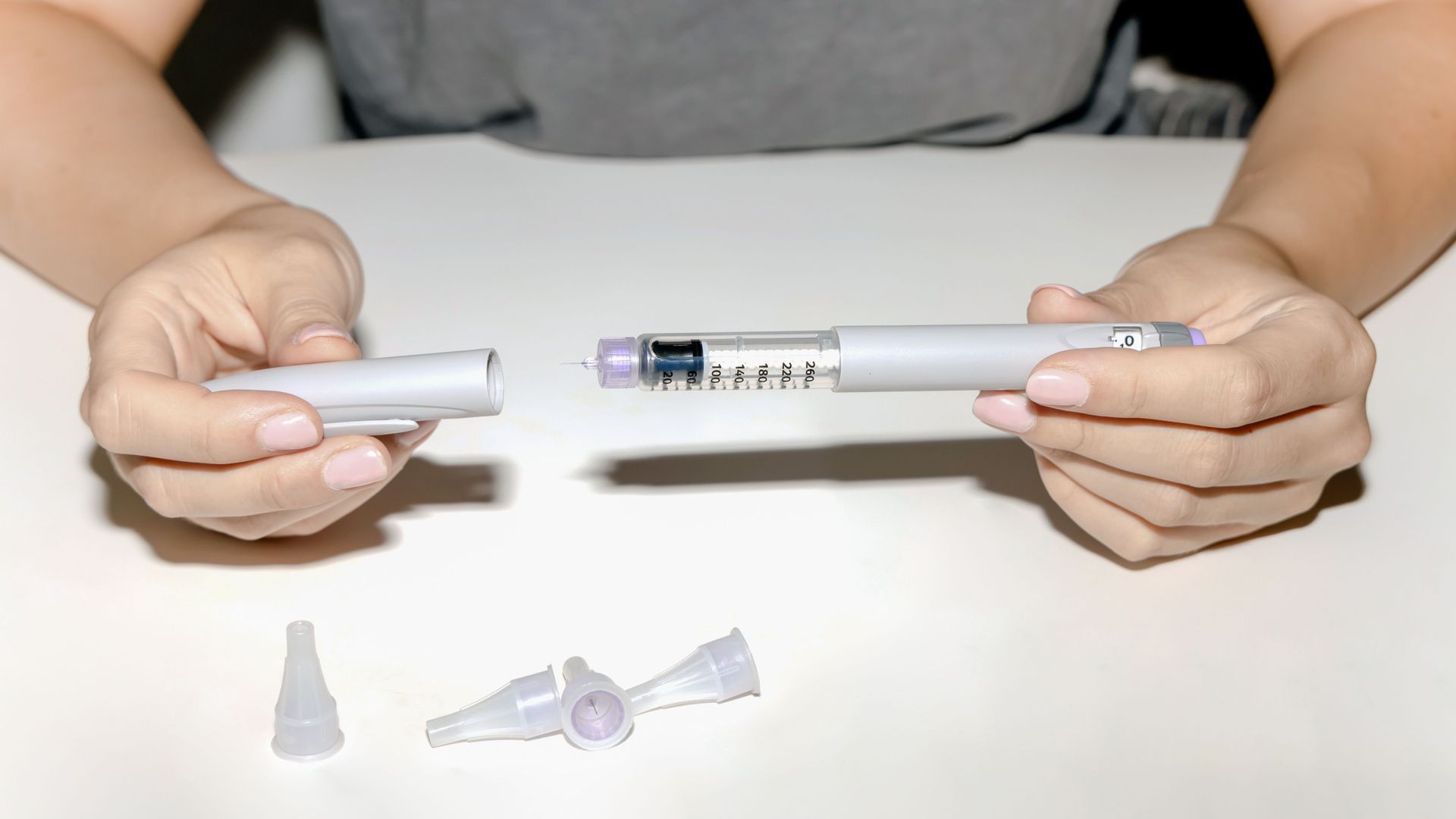
Wegovy (semaglutide) and Mounjaro (tirzepatide) are weekly weight loss injections available on prescription in the UK.
The results seen in Wegovy and Mounjaro's clinical trials become even more impressive when visualised through objects. In the phase 3 semaglutide trial, participants lost an average of 15% of their body weight. Tirzepatide, meanwhile, yielded a groundbreaking 21%.
For someone weighing 100kg, that represents a loss of 15kg to 21kg. In terms of objects, that's the equivalent of:
- A kettlebell or two
- A medium suitcase packed with clothes
- More than 30 FIFA footballs
Do you see how these impressive results come to life with the help of real-life comparisons? You can use this technique in your own weight loss journey, whether it's to help you track progress, set goals, or both.
Celebrating your milestones along the way
Long-term goals matter, but celebrating milestones along the way is just as important. Each one shows you are moving forward.
At five pounds down, you might tell yourself you have dropped the weight of a laptop. At 10 pounds, you've shed the weight of a pumpkin. At 20 pounds, a watermelon. By 35 pounds, you've lost the equivalent of a whole microwave.
Some people choose to mark each milestone with a non-food reward like a new outfit or a day trip. Others use object comparisons to share updates with friends or on social media.

It can also be useful to take photos to record your progress. Nobody else has to see them if you don't want to share. The key is to keep the journey positive and motivating, not restrictive or punishing.
Why this approach matters
Celebrating weight loss in this way means you're acknowledging that progress is more than numbers on a chart. Seeing weight loss compared to objects reminds you that every step is an achievement, no matter how far you are from your longer-term goals.
It also provides perspective. Losing a stone may sound abstract until you remember it's the weight of a small bowling ball. That (rather impressive) image can help your progress stick in your mind and remind you that all the effort you're putting in is paying off.
How SemaPen can help
At SemaPen, we combine over 20 years of clinical care experience with medical weight loss plans and helpful tools that make your progress feel real.
Here's what you can expect:
- Tailored clinical support: a dedicated clinical team helps you stay on track and manages your medication dosage.
- Visible results: smart scales show your progress as you go – great for visualising those object milestones, whether it's a suitcase or a sack of potatoes.
- The SemaPen app: you'll unlock exclusive content that teaches you healthy lifelong habits.
Your plan starts with a medical review to see which of our weight loss programmes is right for you. That might be injectable weight loss medication like Wegovy or Mounjaro, or it could be SemaHealth – our dietitian-led meal replacement programme.
Once approved, we deliver your treatments securely and provide ongoing support throughout your journey.
Ready to take the next step? Our team of obesity experts is here to help you lose weight safely and sustainably. Please don't hesitate to contact us with any questions – or jump right in with our digital assessment today.
Sources
1. Wilding, J.P.H. et al. (2021) "Once-weekly semaglutide in adults with overweight or obesity" The New England Journal of Medicine, 384(11) https://doi.org/10.1056/NEJMoa2032183
2. Jastreboff, A.M. et al. (2022) "Tirzepatide Once Weekly for the Treatment of Obesity" The New England Journal of Medicine, 387(3) https://doi.org/10.1056/NEJMoa2206038
This article was reviewed and approved by Lujain Alhassan, Bariatric Nutritionist, on 31 October 2025.
- Average 15-21% weight loss*
- Tailored programmes built by real experts
- Targeted support to make success feel simpler
- Unique app with weight loss tools and lessons
Your journey starts here
Start your personalised weight loss plan in minutes.
1
Start your online consultation
2
Get approved by our clinical team
3
Begin your programme