
What we learned from the Wegovy clinical trials
Ready to take the next step? See if you're eligible for expert-led weight loss support.
Learn about the main clinical trials for Wegovy (semaglutide), including STEP, SURMOUNT, FLOW and ESSENCE.

Before any medication can be approved for sale, it must go through a series of painstaking clinical trials. These studies investigate whether a drug is safe and effective enough to recommend as a treatment.
But approval is just the start. By running further clinical trials, we can learn more about how a drug works and its wider effects on our health and well-being.
Take Wegovy (semaglutide) . This injectable weight loss treatment went through several trials before its approval as a treatment for type 2 diabetes and weight management. But researchers are still running new studies as we learn more about its potential benefits for heart and liver health.
Let's investigate some of the most important Wegovy clinical trials and look back at what we've learned. Key Wegovy trials for type 2 diabetes and weight management
For a deeper dive into the stages of the STEP and SURMOUNT trials, read our guide to key
weight loss drug trials
.
2016: the SUSTAIN programme
The SUSTAIN trials looked at semaglutide's effectiveness as a treatment for type 2 diabetes.
As researchers wrote in a summary of the trials, semaglutide was 'superior at reducing [blood sugar]… when compared with multiple antidiabetic medications'.¹
As a result of the trials, semaglutide was approved as a type 2 diabetes medication by the FDA and other regulatory authorities under the brand name 'Ozempic'.
But SUSTAIN showed something else, too – semaglutide caused more weight loss in participants than any other drug on the market at the time. Across the 10 trials, participants treated with 1.0mg of semaglutide lost 5.1kg on average.¹ Curious to learn more, semaglutide's manufacturer launched the STEP programme. This was a series of six separate studies involving 5,000 people, designed to explore how semaglutide could aid weight loss over several years.
2021: The STEP programme
The STEP programme's findings were revolutionary for our understanding of semaglutide. For the first time, they demonstrated the drug's safety and effectiveness as a weight loss treatment for people without diabetes.
The STEP 1 trial (the largest of the studies) found that non-diabetic patients
lost an average of 14.9% of their body weight
. Those taking a placebo (a harmless 'dummy' drug) lost just 2.4% on average.²
But approval is just the start. By running further clinical trials, we can learn more about how a drug works and its wider effects on our health and well-being.
Take Wegovy (semaglutide) . This injectable weight loss treatment went through several trials before its approval as a treatment for type 2 diabetes and weight management. But researchers are still running new studies as we learn more about its potential benefits for heart and liver health.
Let's investigate some of the most important Wegovy clinical trials and look back at what we've learned.
Key Wegovy trials for type 2 diabetes and weight management
For a deeper dive into the stages of the STEP and SURMOUNT trials, read our guide to key
weight loss drug trials
. 2016: the SUSTAIN programme
The SUSTAIN trials looked at semaglutide's effectiveness as a treatment for type 2 diabetes.
As researchers wrote in a summary of the trials, semaglutide was 'superior at reducing [blood sugar]… when compared with multiple antidiabetic medications'.¹
As a result of the trials, semaglutide was approved as a type 2 diabetes medication by the FDA and other regulatory authorities under the brand name 'Ozempic'.
But SUSTAIN showed something else, too – semaglutide caused more weight loss in participants than any other drug on the market at the time. Across the 10 trials, participants treated with 1.0mg of semaglutide lost 5.1kg on average.¹ Curious to learn more, semaglutide's manufacturer launched the STEP programme. This was a series of six separate studies involving 5,000 people, designed to explore how semaglutide could aid weight loss over several years.
2021: The STEP programme
The STEP programme's findings were revolutionary for our understanding of semaglutide. For the first time, they demonstrated the drug's safety and effectiveness as a weight loss treatment for people without diabetes.
The STEP 1 trial (the largest of the studies) found that non-diabetic patients
lost an average of 14.9% of their body weight
. Those taking a placebo (a harmless 'dummy' drug) lost just 2.4% on average.²
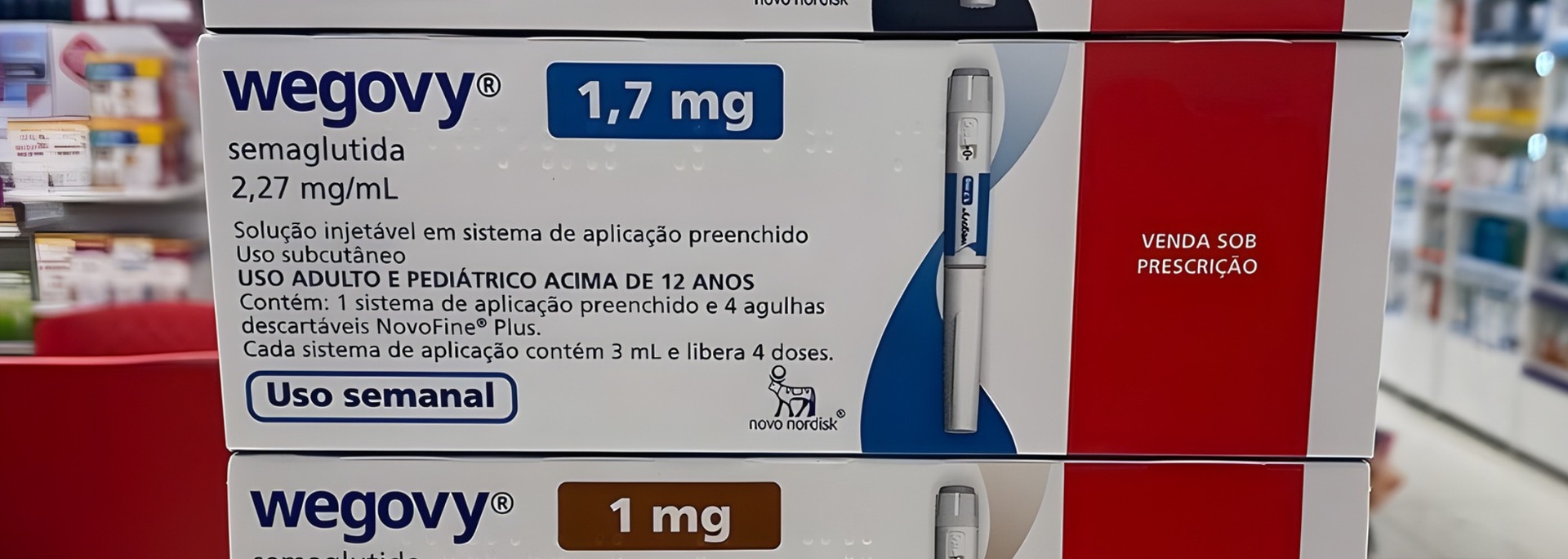
It was clear that semaglutide had potential beyond a diabetes medication. So, in 2022, the National Institute for Health Care and Excellence (NICE) recommended semaglutide as an option for weight management on the NHS.³
2025: SURMOUNT 5
The SURMOUNT programme investigated the effects of a newer injectable weight loss drug called 'tirzepatide' – the active ingredient in
Mounjaro
.
As far as Wegovy goes, the important study here is SURMOUNT-5. This was the first study that directly compared the effects of semaglutide and tirzepatide.
SURMOUNT-5 proved that Mounjaro is better than Wegovy for weight loss – but both still yielded strong results. After 12 months of treatment, those taking semaglutide lost 8.3% of their body weight on average. However, those taking tirzepatide lost an average of 15.3% .⁴
Looking beyond weight loss
As more studies explore the effects of semaglutide, we're gaining a better understanding of the drug's potential. Could Wegovy have benefits beyond weight loss and blood sugar control?
According to two recent, large-scale studies, the answer is 'yes'. Let's take a look.
2024: The FLOW trial finds semaglutide has a positive impact on chronic kidney disease in patients with type 2 diabetes
In the FLOW trial, 3,533 patients with type 2 diabetes and chronic kidney disease were assigned either a weekly 1mg dose of semaglutide or a placebo.
The results showed that, compared to the placebo group, the semaglutide users saw improved risk levels for a number of health concerns:⁵
2025: The phase 1 ESSENCE trial measures the effect of semaglutide on liver conditions
ESSENCE is an ongoing Phase 3 trial. It aims to understand the effect of semaglutide on liver injury and liver scarring, and its potential as a treatment for metabolic dysfunction-associated steatohepatitis (MASH).
In the two-part trial, 1,197 participants receive either a 2.4 mg dose of semaglutide or placebo, as well as standard care. They report results at 72 and 240 weeks.⁶ Part one's findings were presented at the 76th annual American Association for the Study of Liver Diseases (AASLD) meeting in November 2025. They showed that, after 72 weeks, the semaglutide group saw improvements in both liver injury and liver scarring across various ages, genders, races and ethnicities. ⁶
2025: SURMOUNT 5
The SURMOUNT programme investigated the effects of a newer injectable weight loss drug called 'tirzepatide' – the active ingredient in
Mounjaro
.
As far as Wegovy goes, the important study here is SURMOUNT-5. This was the first study that directly compared the effects of semaglutide and tirzepatide.
SURMOUNT-5 proved that Mounjaro is better than Wegovy for weight loss – but both still yielded strong results. After 12 months of treatment, those taking semaglutide lost 8.3% of their body weight on average. However, those taking tirzepatide lost an average of 15.3% .⁴
Looking beyond weight loss
As more studies explore the effects of semaglutide, we're gaining a better understanding of the drug's potential. Could Wegovy have benefits beyond weight loss and blood sugar control?
According to two recent, large-scale studies, the answer is 'yes'. Let's take a look.
2024: The FLOW trial finds semaglutide has a positive impact on chronic kidney disease in patients with type 2 diabetes
In the FLOW trial, 3,533 patients with type 2 diabetes and chronic kidney disease were assigned either a weekly 1mg dose of semaglutide or a placebo.
The results showed that, compared to the placebo group, the semaglutide users saw improved risk levels for a number of health concerns:⁵
- 24% lower risk of 'major kidney disease events' (e.g. kidney failure)
- 18% lower risk of cardiovascular events (e.g. heart disease, stroke)
- 20% lower risk of death from any cause
2025: The phase 1 ESSENCE trial measures the effect of semaglutide on liver conditions
ESSENCE is an ongoing Phase 3 trial. It aims to understand the effect of semaglutide on liver injury and liver scarring, and its potential as a treatment for metabolic dysfunction-associated steatohepatitis (MASH).
In the two-part trial, 1,197 participants receive either a 2.4 mg dose of semaglutide or placebo, as well as standard care. They report results at 72 and 240 weeks.⁶ Part one's findings were presented at the 76th annual American Association for the Study of Liver Diseases (AASLD) meeting in November 2025. They showed that, after 72 weeks, the semaglutide group saw improvements in both liver injury and liver scarring across various ages, genders, races and ethnicities. ⁶

What is MASH?
Previously, this condition has been associated with terms like 'non-alcoholic steatohepatitis' (NASH) or 'fatty liver disease' (FLD). 'MASH' is used more commonly nowadays as it's considered more accurate and less stigmatising.
MASH is one of the most common – and fastest-growing – causes of chronic liver disease worldwide. It affects an estimated 6% of adults, and more than 30% of people living with obesity or diabetes.⁷
MASH often yields very few symptoms early on. However, if left untreated, it can lead to cirrhosis, cancer or needing a liver transplant.
With some experts predicting liver deaths to increase by 178% by 2030,⁸ it's no surprise there's growing interest in semaglutide's potential for liver health.
The ESSENCE trial: what we know so far
ESSENCE part one
After 72 weeks of treatment, patients who had received semaglutide saw drastically better results compared to the placebo group:⁹
- 62.9% saw a reduction in steatohepatitis (fat build-up and inflammation), compared to 34.3% in the placebo group.
- 36.8% saw improvements in liver fibrosis (scar tissue), compared to 22.4% in the placebo group.
ESSENCE part two
Part two will measure the impact of semaglutide after 240 weeks and is expected to finish in 2029.
For close to five years, the study will continue to follow almost 1,200 participants from 37 countries.
So, by the end of phase two, we'll have a much better understanding of semaglutide's impact on liver health across diverse populations.
As for what exactly we'll learn – only time will tell. We'll be sure to let you know as soon as the news breaks.
SemaPen is a UK clinic specialising in non-surgical weight loss treatments . For more guides and helpful tips from our experts, follow our Wegovy and Mounjaro blog .
Sources
1. Singh, G. et al. (2021) "Wegovy (semaglutide): a new weight loss drug for chronic weight management" Journal of Investigative Medicine , 70(1) https://doi.org/10.1136/jim-2021-001952
2. Wilding, J.P.H. et al. (2021) "Once-Weekly Semaglutide in Adults with Overweight or Obesity" The New England Journal of Medicine , 384(11) https://doi.org/10.1056/NEJMoa2032183
3. Mahase, E. (2022) "NICE recommends weight loss drug semaglutide for obese adults" BMJ , 376:o340 https://doi.org/10.1136/bmj.o340
4. Aronne, L.J. et al. (2025) "Tirzepatide as Compared with Semaglutide for the Treatment of Obesity" The New England Journal of Medicine , 393(1) https://doi.org/10.1056/NEJMoa2416394
5. Perkovic, V. et al. (2024) "Effects of Semaglutide on Chronic Kidney Disease in Patients with Type 2 Diabetes" The New England Journal of Medicine , 391(2) https://doi.org/10.1056/nejmoa2403347
6. Novo Nordisk (2025) "Novo Nordisk's Wegovy® (semaglutide 2.4 mg) was associated with liver health-related benefits not solely based on weight loss in adult patients with MASH with liver scarring, according to a new post hoc analysis" [Press release]. Retrieved from https://www.prnewswire.com/news-releases/novo-nordisks-wegovy-semaglutide-2-4-mg-was-associated-with-liver-health-related-benefits-not-solely-based-on-weight-loss-in-adult-patients-with-mash-with-liver-scarring-according-to-a-new-post-hoc-analysis-302610170.html
7. King's College Hospital NHS Foundation Trust (2025) "Research trial reveals new way to treat patients with major cause of liver disease". Retrieved from https://www.kch.nhs.uk/news/research-trial-reveals-new-way-to-treat-patients-with-major-cause-of-liver-disease/
8. Estes, C. et al. (2018) "Modeling the epidemic of nonalcoholic fatty liver disease demonstrates an exponential increase in burden of disease" Hepatology , 67(1) https://doi.org/10.1002/hep.29466
9. Newson, P. (2025) "Semaglutide treats liver disease in two thirds of patients" King's College London . Retrieved from https://www.kcl.ac.uk/news/semaglutide-treats-liver-disease-in-two-thirds-of-patients This article was reviewed and approved by Sarah Abdula, Specialist Dietitian, on 17 December 2025.
- Average 15-21% weight loss*
- Tailored programmes built by real experts
- Targeted support to make success feel simpler
- Unique app with weight loss tools and lessons
Your journey starts here
Start your personalised weight loss plan in minutes.
1
Start your online consultation
2
Get approved by our clinical team
3
Begin your programme

Wondering if weight loss can cause depression? The simple answer: it depends on how you do it.

Obesity is a leading cause of obstructive sleep apnoea. Does that mean weight loss injections can help? Let's look at the evidence.

Wondering where you'll notice weight loss first? Discover the early signs of fat loss and why it's worth celebrating achievements beyond the scale.

A recent trial tested Wegovy for weight loss in children aged 6 to 11. Does that mean younger children will soon be able to access the drug?
Retatrutide is an experimental weight loss drug that's not approved for treatment anywhere. So, why are websites offering it for sale in 2026?

Explore the fastest medically supervised weight loss options, from GLP-1 injections to total diet replacement, and learn why speed isn't everything.

Non-surgical weight loss procedures may help you lose weight without conventional surgery. Learn about your options and which might suit you.

A new GLP-1 drug called 'avexitide' is in development, but it works very differently from Wegovy and Mounjaro. Get the facts in our guide.

Learn how medically supervised total diet replacement (TDR) programmes work, who they're suitable for and what the evidence says.

Learn who total diet replacement programmes are designed for, how they work and whether they could support your weight loss goals.

