
Are homemade treatments for weight loss effective?
Ready to take the next step? See if you're eligible for expert-led weight loss support.
Can homemade treatments for weight loss give your diet a boost? Join us as we weigh up the evidence.
An estimated one billion people worldwide now live with obesity. If you're one of them, you may be looking for ways to lose weight and improve your health.
The good news is that there are several proven weight loss treatments that can help.
Diet and exercise is the big one. The NHS recommends reducing your calorie intake by 600 calories per day. Together with physical activity, this can help you achieve a steady and sustainable weight loss of 0.5kg to 1kg (1lbs to 2lbs) per week.
Do you find it difficult to get results with diet and exercise alone? Weight loss drugs like Wegovy and Mounjaro can lend a welcome helping hand. These drugs are clinically proven to accelerate weight loss when combined with a healthy diet and increased physical activity.
But what about homemade treatments for weight loss? Can certain shop-bought ingredients or kitchen concoctions help you lose weight more quickly or effectively?
Here, the evidence gets a little shakier. While studies exist that look at homemade or herbal remedies, they're often thin on the ground and are sometimes of poor quality.
That's not to say homemade remedies can't help. However, it's worth paying close attention to the evidence before pinning your hopes on any one ingredient.
In this article, we look at several homemade weight loss treatments and weigh up the available evidence for each.
Homemade treatments for blood sugar control
Many of us consume too much sugar. But it's not hard to see why.
Sugar is a quick and easy source of energy. The human body craves quick and easy sources of energy. So, when we consume sugar, our bodies reward us by releasing pleasure hormones.
However, when you're trying to cut down on calories, sugar cravings can be your undoing.
There's limited evidence to suggest that certain spices can help regulate blood sugar levels and control sugar cravings. These include:
Cinnamon
Several small studies have found a link between cinnamon and blood sugar control.¹ ² However, these results are contradicted by other studies – and few, if any, large-scale trials have been carried out.
Regardless of this, cinnamon is a tasty ingredient with a naturally sweet flavour. You may find it to be an effective sugar substitute. Try sprinkling it on porridge or toast instead of the usual sugary toppings.
Turmeric
Turmeric has been used in traditional Eastern medicine for centuries. Several studies have suggested that it can control blood sugar levels and a 2021 systematic review supported this conclusion.³ However, more studies are needed to verify these claims and help us understand its effects more clearly.

In any case, turmeric can make a pleasant, low-calorie tea. So, if consumed in reasonable quantities, there should be no harm in sipping it as part of a calorie-controlled diet.
Liquorice tea
We're talking about the plant, here – not the confectionary, which has a high sugar content.
Liquorice root is naturally sweet and has a low calorie content. Many have found that drinking liquorice tea can soothe a sweet craving.
However, it's also known to increase blood pressure. It's important to talk to your doctor before drinking liquorice tea if you already have high blood pressure.
Fruit teas
Many sweet-tasting but sugar-free fruit teas are available. These can help to control sugar cravings without adding many calories to your diet.
Home remedies for fat metabolism
Some herbal ingredients are believed to help the body metabolise (process) fat. But is there any truth to these claims?
Let's investigate.
Apple cider vinegar
Apple cider vinegar (ACV) has been part of the conversation around weight loss for many years. Its proponents claim it can help reduce body fat and make you feel fuller.
However, while a few small-scale studies have found promising results, their findings have yet to be replicated or studied at scale.
Some studies also suffered from critical flaws. A 2018 trial, for instance, found that AVC "significantly reduced body weight" and helped control appetite.
However, this trial lacked a placebo control group – all the participants knew they were taking ACV, which may have affected the results.
There is also some evidence to suggest that ACV may help with cholesterol levels and gut health. But the research, generally speaking, is inconsistent – and more studies are needed before we can claim any benefits with confidence.
And there are some potentially harmful effects to be aware of.
First, ACV is too strong to take undiluted as it would burn your throat. The acid can also erode tooth enamel, so it's traditionally taken by the tablespoonful and mixed into a mug of warm water. You should brush your teeth after drinking it.
Secondly, a 2023 study suggested that ACV can lower blood glucose levels in those with type 2 diabetes.⁵ As a precaution, those taking insulin should be cautious before using ACV.
Kimchi
This traditional Korean food has come into the spotlight more recently. It's claimed to restore the balance of beneficial bacteria in your gut, which in turn is believed to encourage fat metabolism.
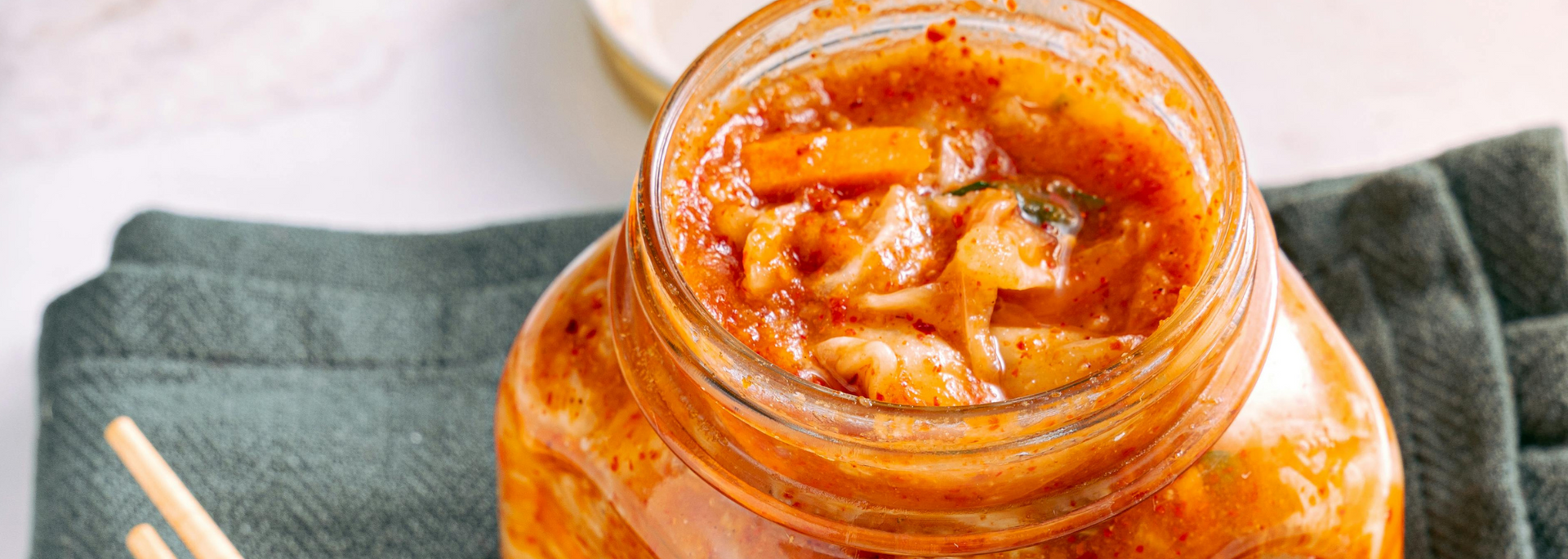
Kimchi is a traditional fermented cabbage. Knappa cabbage is soaked in salt water (brined) and then rinsed and mixed with blended garlic and ginger, plus Korean red pepper powder. The mixture is sealed in a container and then refrigerated for three to four days. As it rests in the fridge, the natural bacterial cultures on the raw cabbage cause fermentation.
Several recent studies into kimchi and weight loss have had promising results. In a 2024 placebo-controlled trial, those who consumed kimchi saw a "significant reduction in body fat".⁶ And a 2023 analysis suggested that consuming one to three servings of kimchi per day was linked to lower rates of obesity.
However, these studies were not without their flaws. The first was very small in scale, involving only 90 male participants. The second, while surveying nearly 116,000 participants, only showed that people who eat kimchi tend to see lower obesity rates than those who don't. It didn't show that kimchi has a direct effect on obesity in medical terms.
You guessed it – more studies are needed before we can confidently recommend kimchi as a homemade treatment for weight loss. However, if prepared and stored correctly, kimchi is a safe and tasty foodstuff with a negligible calorie content. So, if you like kimchi, there's little harm in munching the stuff.
Green tea
These leaves come from the same plant that produces our nation's favourite, black tea. The difference is that green tea is only briefly dried – just long enough to stop the oxidation process and preserve the leaves.
Green tea has been used traditionally as a weight loss treatment for many years. But recently, a spate of TikTok videos have emerged, proposing that green tea has similar effects to weight loss medications like Wegovy and Mounjaro.
These drugs mimic a natural hormone called GLP-1, which helps to regulate food cravings and blood sugar levels. Some TikTokers claim that green tea stimulates GLP-1, leading to similar effects.
Is there any truth to this claim? There's limited research into the subject. However, one of the few relevant studies found no significant difference in GLP-1 levels between those using green tea and those using a placebo.
Additionally, a 2012 review investigated links between green tea and weight loss more generally. The authors concluded that, while consuming green tea tends to cause weight loss, that weight loss is so small as to be "statistically non-significant".
Have you tried and failed to lose weight using diet and exercise? You may be eligible for SemaPen's trusted medical weight loss plans. We help people achieve their weight loss goals using the clinically proven medications Wegovy and Mounjaro. To get started, take our free online consultation.
Sources
1. Kizilaslan, N. et al. (2019) "The Effect of Different Amounts of Cinnamon Consumption on Blood Glucose in Healthy Adult Individuals" International Journal of Food Science https://doi.org/10.1155/2019/4138534
2. Solomon, T.P.J. et al. (2009) "Changes in glucose tolerance and insulin sensitivity following 2 weeks of daily cinnamon ingestion in healthy humans" European Journal of Applied Physiology, 105 https://doi.org/10.1007/s00421-009-0986-9
3. Zhang, D. et al. (2013) "Curcumin and Diabetes: A Systematic Review" Evidence-Based Complementary and Alternative Medicine https://doi.org/10.1155/2013/636053
4. Khezri, S.S. et al. (2018) "Beneficial effects of Apple Cider Vinegar on weight management, Visceral Adiposity Index and lipid profile in overweight or obese subjects receiving restricted calorie diet: A randomized clinical trial" Journal of Functional Foods, 43 https://doi.org/10.1016/j.jff.2018.02.003
5. Jafarirad, S et al. (2023) "The improvement effect of apple cider vinegar as a functional food on anthropometric indices, blood glucose and lipid profile in diabetic patients: a randomized controlled clinical trial" Frontiers in Clinical Diabetes and Healthcare, 4 https://doi.org/10.3389/fcdhc.2023.1288786
6. Lee, W. et al. (2024) "Effects of kimchi consumption on body fat and intestinal microbiota in overweight participants: A randomized, double-blind, placebo-controlled, single-center clinical trial" Journal of Functional Foods, 121 https://doi.org/10.1016/j.jff.2024.106401
7. Jung, H. et al. (2023) "Association between kimchi consumption and obesity based on BMI and abdominal obesity in Korean adults: a cross-sectional analysis of the Health Examinees study" BMJ Open, 14 https://doi.org/10.1136/bmjopen-2023-076650
8. Liu, C. et al. (2014) "Effects of Green Tea Extract on Insulin Resistance and Glucagon-Like Peptide 1 in Patients with Type 2 Diabetes and Lipid Abnormalities: A Randomized, Double-Blinded, and Placebo-Controlled Trial" PLOS One, 9(3)
https://doi.org/10.1371/journal.pone.0091163
9. Jurgens, T.M. et al. (2012) "Green tea for weight loss and weight maintenance in overweight or obese adults" Cochrane Database of Systematic Reviews, 12 https://doi.org/10.1002/14651858.CD008650.pub2
- Average 15-21% weight loss*
- Tailored programmes built by real experts
- Targeted support to make success feel simpler
- Unique app with weight loss tools and lessons
Your journey starts here
Start your personalised weight loss plan in minutes.
1
Start your online consultation
2
Get approved by our clinical team
3
Begin your programme