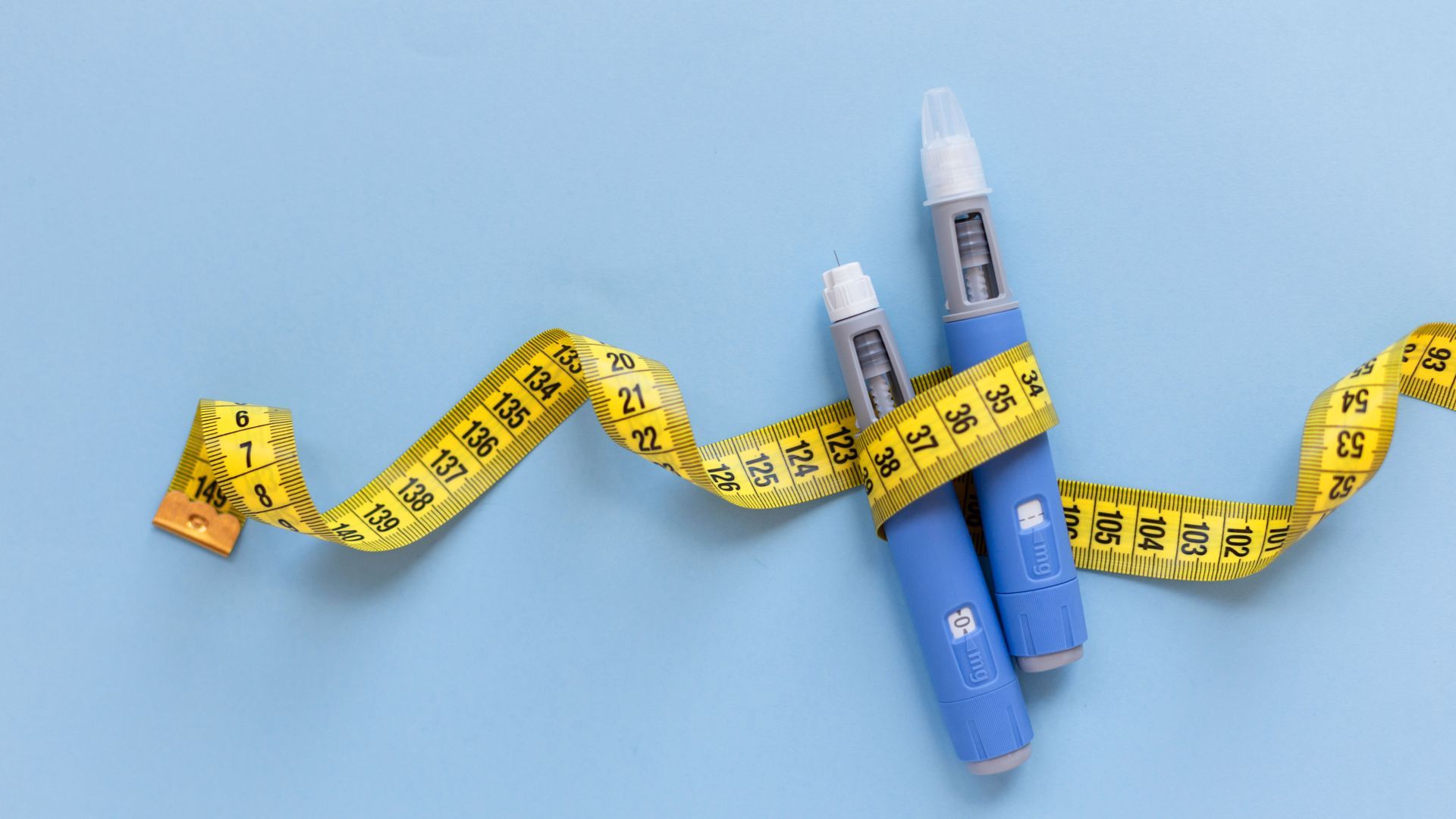

Can Ozempic cause pancreatitis? The MHRA hopes to find out
Ready to take the next step? See if you're eligible for expert-led weight loss support.
The MHRA is set to study a possible link between drugs like Ozempic and pancreatitis. What does this mean for you? Let's find out.

GLP-1 weight loss injections are booming in popularity – and it's not hard to understand why.
Wegovy and Mounjaro – the most effective GLP-1s on the market – generate an average weight loss of 15% and 21%. These kinds of game-changing results would previously have only been achievable with weight loss surgery. But now, anyone with a BMI of 30 or more can access safe and effective non-surgical weight loss treatments from private prescribers like SemaPen.
Demand is so high that Ozempic – a type 2 diabetes drug with similar effects – is currently experiencing a global supply shortage.
GLP-1 drugs are popular because they work, they're clinically tested and they're proven safe when prescribed by a healthcare professional.
But they're also relatively new. And like all new medications, there's still room to learn about rare and unexpected side effects.
One such side effect is pancreatitis. Right now, we're not sure if there's a definite link between drugs like Ozempic and pancreatitis. But with a landmark new study, the UK's Medicines and Healthcare products Regulatory Agency (MHRA) hopes to find out.
What is the MHRA looking at?
As reported by the British Medical Journal, the MHRA is set to study whether GLP-1 medications could be behind hundreds of reported pancreatitis cases.
Pancreatitis is inflammation of the pancreas, a gland involved in digestion and regulating blood sugar levels. The condition can cause symptoms like pain, nausea and vomiting. It can be very serious if left untreated.
The MHRA has received more than 500 reports of pancreatitis among people taking GLP-1s. That includes 10 people who died from the condition.
By studying patient data like these, the MHRA hopes to learn whether there's a genetic link between taking the drugs and developing pancreatitis. In other words, some people might be more prone to developing the condition based on something in their DNA.
The MHRA is the UK's drug regulator. That means the results of this study could change how GLP-1 medications like Ozempic, Wegovy and Mounjaro are prescribed and used in the UK.
Should I be worried?

If you're taking a weight loss injection or thinking of taking one, you might find all this talk of pancreatitis a little bit concerning.
We understand. However, it's important to realise that there's still no proven link between the medications and the condition.
Experts are certainly aware of the possibility. That's why Mounjaro's manufacturer, Eli Lilly, mentions acute pancreatitis as a rare side effect in the drug's patient information leaflet. According to that leaflet, the condition may affect up to one in 100 users.
But that doesn't mean drugs like Mounjaro are directly responsible for patients developing pancreatitis. Instead, it might be that people who take these medications are more likely to develop pancreatitis for other reasons.
The MHRA is looking into a possible genetic link. But it could also be related to the fact that people who take GLP-1 drugs are much more likely to be living with obesity.
Obesity can cause many complications and can be the forerunner to a whole host of medical conditions. Take gallstones, for instance. To cite one figure, women with a BMI over 30 are twice as likely to develop gallstones.
And gallstones are the most common cause of acute pancreatitis in the Western World, accounting for up to 40% of cases.
The bottom line
So, it could be that gallstones are causing people who take GLP-1s to develop pancreatitis. Or, as the MHRA suspects, it might be something in their DNA. Or it could be something else entirely.
What's important is that the MHRA is trying to find out.
See, we know from clinical trials that weight loss injections are safe for the vast majority of people. But gaining a better understanding of the medications we prescribe and use is always a good thing. It means we're even better equipped to care for patients and keep them safe – especially the minority who might be more at risk of complications.
That's why, at SemaPen, we welcome the MHRA's study. As for what happens next, we'll keep you posted.
SemaPen is a weight loss injection clinic founded by Professor David Kerrigan, one of the UK's foremost obesity experts. For more news and advice, follow our blog.
Sources
1. Wilding, J.P.H. et al. (2021) "Once-weekly semaglutide in adults with overweight or obesity" The New England Journal of Medicine, 384(11) https://doi.org/10.1056/NEJMoa2032183
2. Jastreboff, A.M. et al. (2022) "Tirzepatide Once Weekly for the Treatment of Obesity" The New England Journal of Medicine, 387(3) https://doi.org/10.1056/NEJMoa2206038
3. BMJ 2025; 389:r1344
4. Parra-Landazury, N.M. et al. (2021) "Obesity and Gallstones" Visceral Medicine, 37(5) https://doi.org/10.1159/000515545
5. Kundumadam, S. et al. (2020) "Gallstone pancreatitis: general clinical approach and the role of endoscopic retrograde cholangiopancreatography" The Korean Journal of Internal Medicine, 36(1) https://doi.org/10.3904/kjim.2020.537
This article was reviewed and approved by Alice Fletcher, Lead Bariatric Dietitian, on 6 August 2025.
- Average 15-21% weight loss*
- Tailored programmes built by real experts
- Targeted support to make success feel simpler
- Unique app with weight loss tools and lessons
Your journey starts here
Start your personalised weight loss plan in minutes.
1
Start your online consultation
2
Get approved by our clinical team
3
Begin your programme