
Diet-only vs weight loss injections: what works best?
Ready to take the next step? See if you're eligible for expert-led weight loss support.
Do weight loss injections always mean better results, or can diet alone cause significant weight loss? Let's compare the evidence.
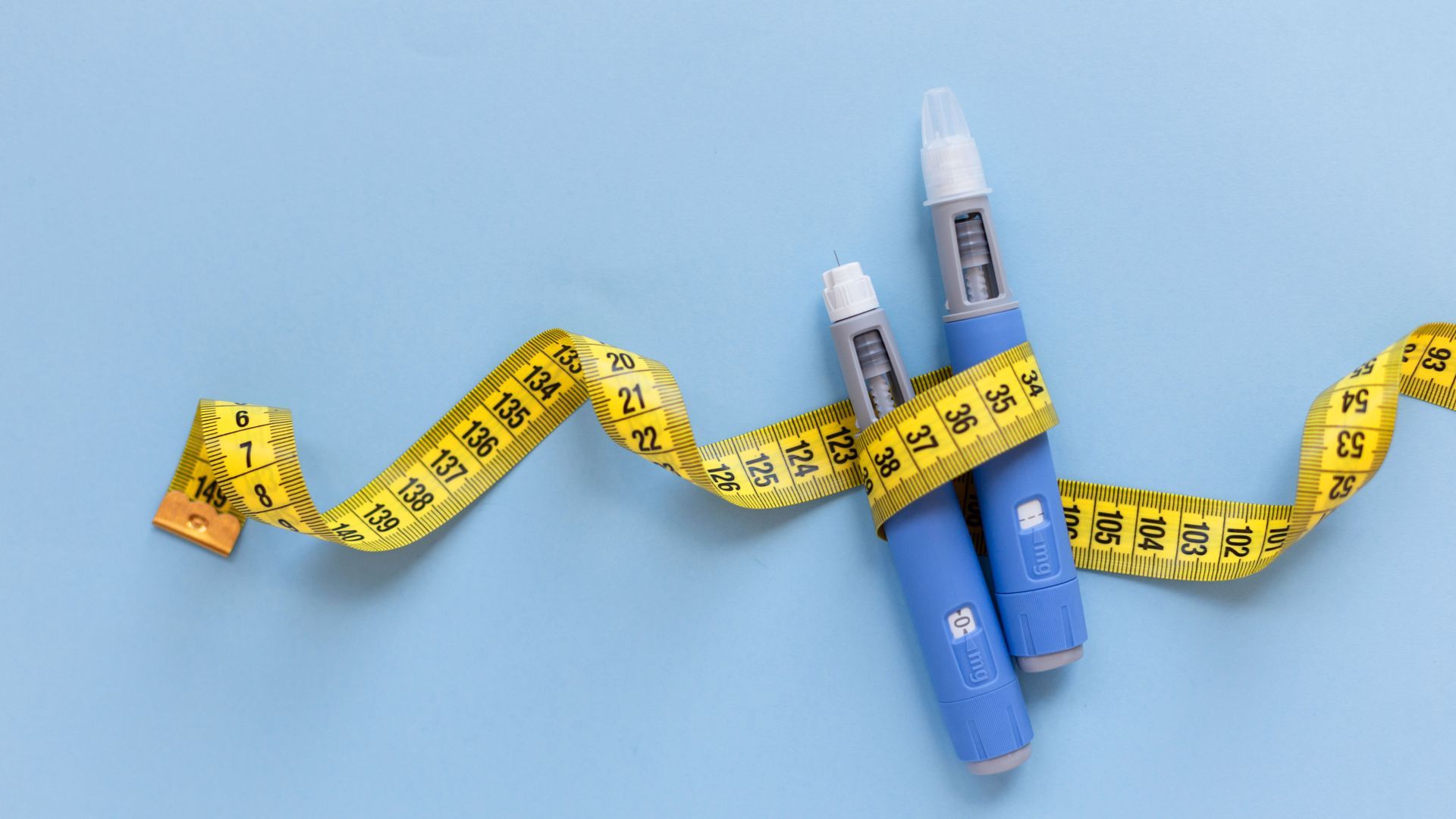
If you're interested in losing weight, you've probably heard of prescription weight loss injections like Wegovy and Mounjaro.
These medications are very popular and very effective, with Mounjaro users losing around 21% of their starting body weight with the right support.¹
You've probably also wondered if these injections are right for you. Do you really need weight loss medication, or could you get the same results by changing your diet?
Unfortunately, there's no simple answer. That's because:
- Everyone responds differently to treatment.
- Weight loss is about behaviour (the things you do), as well as biology (how your body works) and many other factors.
- It's not really about choosing one or the other. Weight loss injections can support a calorie-controlled diet, but healthy eating should always be at the core of a sensible weight loss plan.
So, instead of telling you which is best, let's compare the evidence. That way, you can decide which approach is the best fit for your health, lifestyle and personality.
Diet-only weight loss: does it work?
Absolutely.
In simple terms, weight loss happens when you consume fewer calories (energy) than you burn through activity. Exercise helps, but the simplest and most effective way to do this is to change your diet.
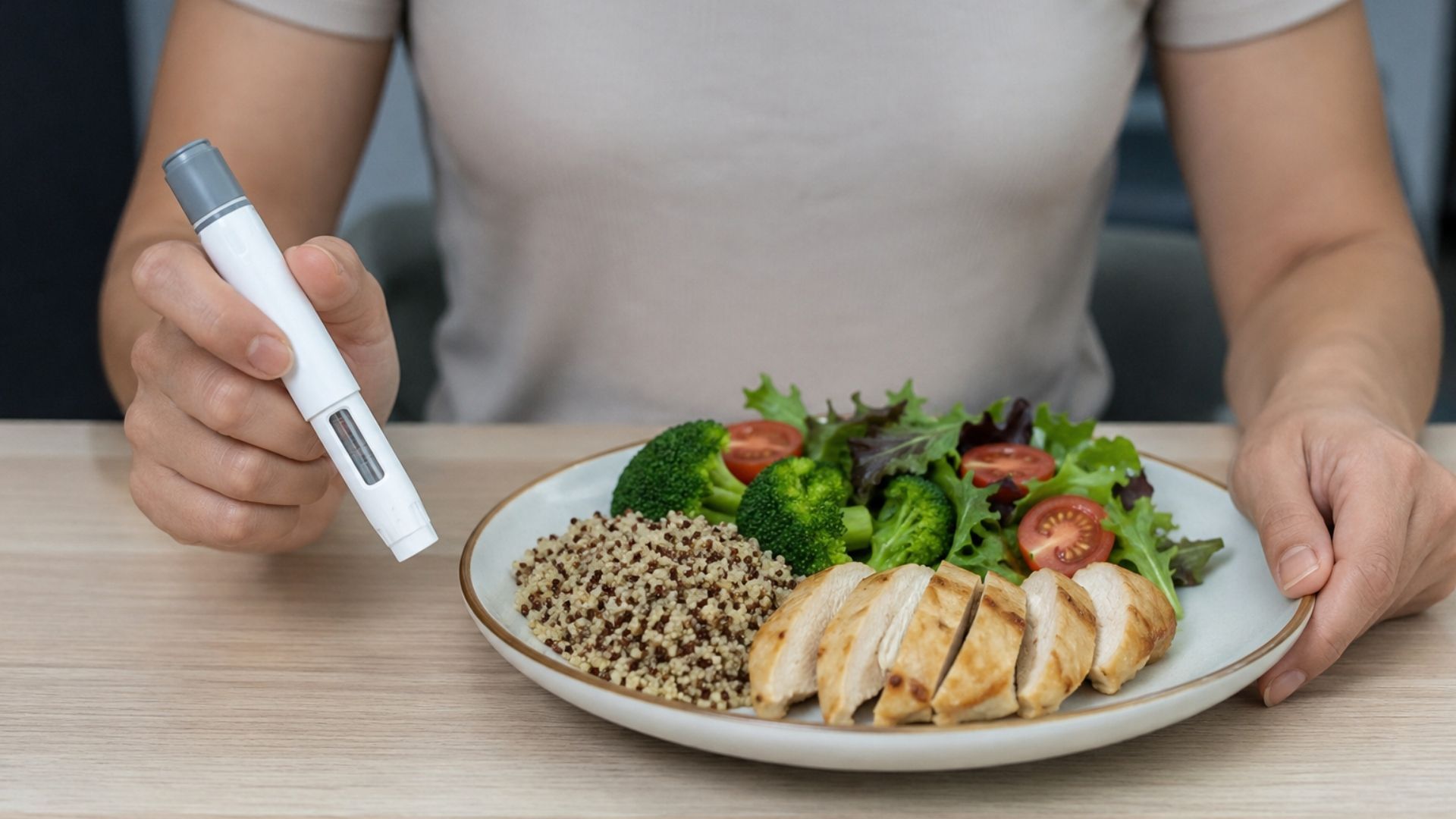
Whether or not you take weight loss injections, eating a balanced, calorie-controlled diet remains the foundation of healthy weight loss.
This is key. Weight loss injections can help make your diet more effective – but it's what you eat that causes the weight loss.
The problem: for many people, losing weight through diet alone can be difficult. It takes enormous willpower to kickstart weight loss and, especially, to maintain it.
Why is losing weight through diet so difficult?
When we lose weight, our bodies adapt – and not always in helpful ways.
Losing weight can cause:
- Long-term changes in appetite hormones²
- Increased hunger
- Fluctuating energy levels, as your body attempts to use energy more efficiently
In effect, your brain is trying to defend its previous weight. Trying to fight this natural process can be quite challenging.
That's one reason obesity is increasingly seen as a chronic disease. A person's choices are only one small part of why they might be carrying extra weight. Biology, society and other factors outside of our control all make weight loss more difficult.
How do weight loss injections help?
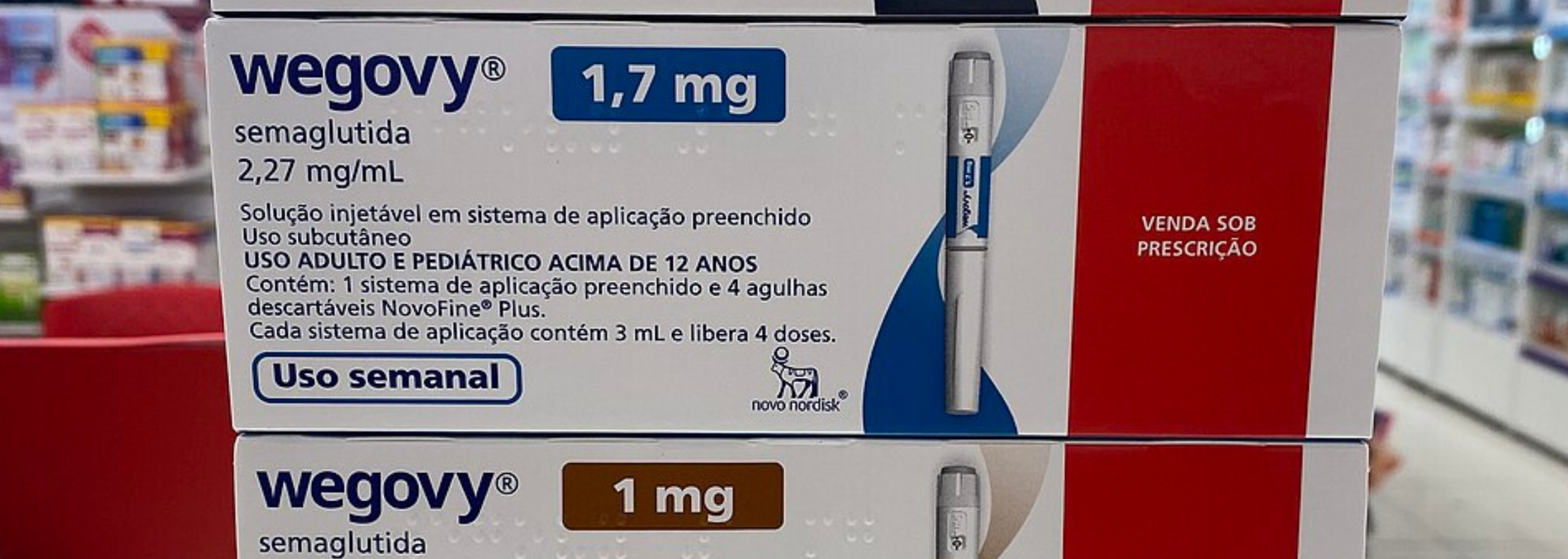
Weight loss injections support a healthy diet and lifestyle by making it easier to control appetite and food cravings.
Despite what you might have heard, they don't melt fat or cause weight loss on their own. It's still your diet and lifestyle that cause the weight loss. But they can make it more effective by making healthy choices feel easier.
Weight loss injections work by:
- Reducing appetite
- Slowing stomach emptying
- Increasing fullness
- Making calorie reduction easier
The key point: weight loss injections work for many people, but they're not a replacement for diet and exercise. They still work best alongside healthy eating and regular activity.
Diet only vs weight loss: the facts compared
| Diet alone | Weight loss injection |
|---|---|
| Can yield significant results, but average weight loss varies greatly | Tends to lead to more average weight loss |
| No medication needed | Prescription medication that must be injected once weekly |
| Needs lots of willpower and determination | Can make it easier to make healthy choices |
| Can be difficult to maintain weight loss | Often requires long-term treatment to maintain weight loss |
Can you lose as much weight through diet alone?
It's possible, but it's not easy.
Studies show that, with diet and exercise support:
- People taking Mounjaro lose an average of 21% of their starting body weight over 72 weeks.¹
- People taking Wegovy lose an
average of 15%
of their starting body weight over 68 weeks.³
With a diet-only approach, weight loss can vary significantly from person to person. However, studies tend to show an average of around 10% over six months to a year.⁴˒⁵
In case that's hard to visualise, the NHS recommends aiming to lose between 0.5kg and 1kg each week. That's considered a healthy rate of weight loss for most people.⁶
It's possible to lose more, and some people might do so naturally as they adopt a healthier diet. However, losing too much weight too quickly can do more harm than good.
Whichever route you choose – diet or weight loss injections – it's best to aim for steady, sustainable weight loss supported by healthy eating and regular exercise.
The importance of support

All the weight loss studies we've mentioned have something in common.
The researchers didn't just measure the effects of diet or weight loss injections on their own. They provided expert support to help the participants make healthy diet choices and exercise regularly.
That's because diet and exercise support weight loss and overall health. But it's also about helping them find the willpower to see it through.
Weight loss can be lonely. Having a strong support network backed with clinical expertise can make all the difference to your success, no matter how you choose to lose weight.
Another option: total diet replacement
If you're unsure about weight loss injections but still want support to lose weight, you might want to consider total diet replacement (TDR).
With a TDR programme, you swap your usual meals for nutrition-rich soups or shakes. These provide all the energy and nutrients you need, while giving you a simple daily meal plan with built-in calorie control.
After a few months, you start to reintroduce normal food.
At Semapen, we offer the SemaHealth TDR programme alongside our medication-supported weight loss programmes.
SemaHealth includes expert dietitian support to keep you safe and healthy as you work your way through the programme, as well as many other benefits.
Here's a quick comparison of our programmes:
| SemaHealth | SemaPen with Wegovy | SemaPen with Mounjaro |
|---|---|---|
| Total diet replacement programme | Medication-supported weight loss programme | Medication-supported weight loss programme |
| Average weight loss of 10% to 15%⁷ | Average weight loss of 15%³ | Average weight loss of 21%¹ |
| Includes expert, tailored support from our clinical team | Includes expert, tailored support from our clinical team | Includes expert, tailored support from our clinical team |
| Unlocks access to the Semapen app, including weight monitoring and exclusive Semapen Academy lessons | Unlocks access to the Semapen app, including weight monitoring and exclusive Semapen Academy lessons | Unlocks access to the Semapen app, including weight monitoring and exclusive Semapen Academy lessons |
| Includes a 10-month online fitness programme as standard | Fitness programme included in higher tiers | Fitness programme included in higher tiers |
It's easy to find out if you're eligible. All you have to do is take our quick online consultation. We'll let you know straight away if you qualify for our programmes and which might be right for you.
Sources
1. Jastreboff, A.M. et al. (2022) "Tirzepatide Once Weekly for the Treatment of Obesity" The New England Journal of Medicine, 387(3) https://doi.org/10.1056/NEJMoa2206038
2. Sumithran, P. et al. (2011) "Long-Term Persistence of Hormonal Adaptations to Weight Loss" The New England Journal of Medicine, 365(17) https://doi.org/10.1056/NEJMoa1105816
3. Wilding, J.P.H. et al. (2021) "Once-Weekly Semaglutide in Adults with Overweight or Obesity" The New England Journal of Medicine, 384(11) https://doi.org/10.1056/NEJMoa2032183
4. Redman, L.D. et al. (2009) "Effect of Calorie Restriction with or without Exercise on Body Composition and Fat Distribution" The Journal of Clinical Endocrinology & Metabolism, 92(3) https://doi.org/10.1210/jc.2006-2184
5. Foster-Schubert, K.E. et al. (2012) "Effect of diet and exercise, alone or combined, on weight and body composition in overweight-to-obese post-menopausal women" Obesity (Silver Spring), 20(8) https://doi.org/10.1038/oby.2011.76
6. NHS (2026) Overweight and obesity in adults. Retrieved from https://www.nhs.uk/conditions/overweight-and-obesity/
This article was reviewed and approved by Lujain Alhassan, Bariatric Nutritionist, on 4 July 2026.
- Average 15-21% weight loss*
- Tailored programmes built by real experts
- Targeted support to make success feel simpler
- Unique app with weight loss tools and lessons
Your journey starts here
Start your personalised weight loss plan in minutes.
1
Start your online consultation
2
Get approved by our clinical team
3
Begin your programme